Housing Advice, Student Life

Tips for Getting Along With Your Neighbors

For many students, living off-campus comes with a greater sense of independence.  However, with this independence comes greater responsibility, and one main responsibility many students often forget is neighbor relations.  While it may not seem like the most important thing on your list, fostering poor relationships with your neighbors is the major reason why students receive a knock on the door from the cops.  This is why we’ve identified some of the biggest problems students experience with living off-campus in terms of neighbor relations and put together some tips to keep yourself from becoming just another one of those “pesky kids.”

Noise.  One of the biggest problems students experience when it comes to living off-campus are noise complaints.  Oftentimes students will have a party or just have few friends over and the cops will get called because of the noise.  However, this is highly preventable; it is easy to turn down the music, especially after a certain time of night.  The general rule of thumb is turn down the volume earlier on Sunday evenings and during the week, and later on Fridays and Saturdays.  However, many communities will have noise ordinances so you may want to check on these times for your specific community.

Parking.  Another problem students experience with their neighbors is parking.  If someone has parked their car blocking your neighbor in, your friends have parked illegally, or there are just too many cars on the street, the cops could get called.  You want to make sure that the people you are inviting over are also courteous of your neighbors as you are.  When you have your friends over, make sure that they aren’t parked so that they’re blocking your neighbors in and that they aren’t parked on someone else’s property.  You may also want to ask your friends to carpool to your house so there won’t be too many cars parked on the street.

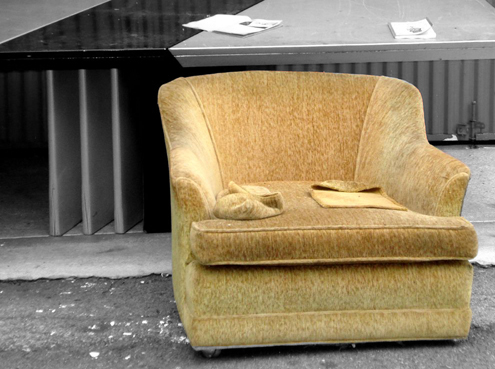
Trash/Furniture.  One ordinance many neighborhoods have is related to trash and indoor furniture being outside.  These ordinances maintain that trash should always be in the bin or dumpster, and that indoor furniture should not be left outside (if it’s left to the elements, it’s basically considered trash anyway).  If you have grouchy neighbors, you may be receiving a nice big fine for not complying with these types of ordinances.

Yard Maintenance.  In many cases your landlord will take care of yard maintenance.  However, if they don’t offer this, you should pitch in to make sure the yard is looking nice.  While this also may not be at the top of your list, in many cases your neighborhood will actually have ordinances in relation to overgrowth.  Not only could you get slapped with a fine, you could have other problems with letting the plants and grass in your yard get too big.  These added problems could be an increase in the population of bugs in and around your house (ewww!), as well as interference with power lines.  The best course of action here is to make sure the grass is cut, there aren’t too many weeds, there isn’t any garbage hanging around, and nothing is around the power lines.

Overall, the best way to avoid problems with your neighbors is to introduce yourself when you move in.  This is important because . . .

  1. It puts a face to the new neighbors.  By introducing yourself you are setting yourself apart from many of the other student tenants that have gone before you.  This reduces the likelihood that your neighbors will lump you together with those tenants, and you can build your own relationship with your neighbors.
  2. By introducing yourself and letting your neighbors know that they can come talk to you directly if they ever need anything or have a problem, you are saving everyone a lot of grief.  You will be less likely to get a knock on your door from the cops and your neighbor will no longer get woken up at 3 am by loud music.
  3. Your neighbors can be your biggest resource; they know the area because they’ve lived there longer and they can help you out if you ever run into any problems of your own.

By introducing yourself to your neighbors and by heading off any issues before they arise, you will not only have a better off-campus experience, but you will most likely prevent the cops being called.  It’s best to maintain a good relationship with your neighbors because it not only saves you all this grief, it is also makes you more independent, and demonstrates that you can be a mature young adult.

Other articles referenced:

Good Neighbor Relations Guide by Liveable Neighborhoods for Kansas City

Good Neighbor Relations Among Students & Community Members by Melissa Emerson

Standard
Roommates, Student Life

I Hate My Roommate: What To Do When Your Relationship With Your Roommate Goes Wrong

More often than not, you’ll find yourself in a disagreement with your roommate. While not every disagreement will end in a full-blown fight, there may be times when it will.  The only thing you can do is to prepare yourself for those times and to be ready for anything.

For example, say your roommate has been having their significant other over to your place too much.  When you go to talk to them about it, they get defensive and the issue never gets resolved.  Let’s say that after that point it gets very awkward around your place and you end up leaving each other notes, ignoring one another, and/or just not speaking.  What would you have to do?

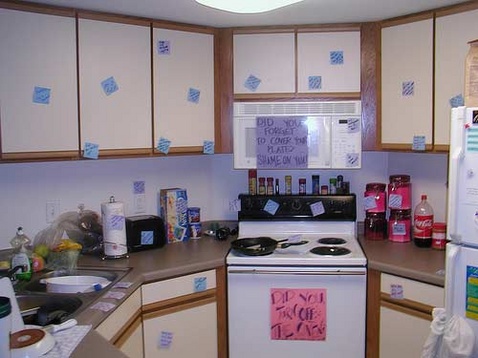
In every case, you should always try to talk with your roommate again.  Avoid leaving passive aggressive notes for one another (you can see why that might not work on www.passiveaggressivenotes.com) and giving them the silent treatment.  It’s time to act like adults; you’re in college (or maybe out of college, depending on who’s reading this).  Take some time and plan out what you’re going to say to them.  Focus on how their actions make you feel and avoid making it about defects in their personality.

You also want to be sure to talk to them when you are calm and levelheaded; they won’t listen to you if you scream at them.  Be sure to detail your feelings, but also be sure to listen to what they have to say.  No matter what, try hard not to take things too personally or become too defensive; this only makes matters worse.  Instead, try to think logically about what they have to say; this means being able to criticize yourself.  What could you be doing to upset them?

If talking with them doesn’t seem to work and it only seems to make things worse, the only thing you can really do from there is to be civil to one another.  Maintain your consideration and respect for one another.  Being roommates doesn’t necessarily mean you have to be friends, or that you even have to like each other; just as long as you respect one another and are considerate, your relationship (or lack-there-of) can work.

While fighting with your roommate can be traumatic, it happens to a lot of people.  The only thing you can do is prepare yourself for those scenarios when it doesn’t work, and sometimes you do just have to concede that you don’t see eye-to-eye or that you just don’t get along.  Although it stinks when you and your roommate don’t get along, it is better that you both can at least come to an understanding and share mutual respect for one another and your space.

Standard
Housing Advice, Roommates

What Happens When You Get a New Roommate?

It happens all the time:  You choose to live in the same apartment for another year, your roommate moves on, and you end up with a new roommate.  While it is just a part of life, it’s always a little weird adding a new roommate to the mix, especially if you have been living there already.  This is why we’ve put together some suggestions to help you navigate your new roommate situation.

Don’t forget that it’s their place too.  This is perhaps the most important thing to remember:  If you’re adding a new roommate to the mix, you can’t forget that the apartment is just as much theirs as it is yours.  Just because you have been living there longer doesn’t give you the upper hand.

Take time to get to know them a little.  We’re not saying you have to be best friends, but it is considerate to try to get to know them a little bit.  In particular, you should consider asking them questions about their lifestyle preferences (i.e. when they go to bed, where they like to study, etc.).  That way you know what they like and what they don’t.

Take time to explain to them your existing house rules.  If you and your roommate(s) had previously established house rules (i.e. guest policy, chore distribution, etc.), you want to let them know.  However, because this person is new to the situation, you shouldn’t consider these rules to be set in stone.  Talk with your new roomie about how they feel about the rules you’ve established, what they like (or dislike) about them, and how the house rules can accommodate everyone’s preferences.

Give them a tour.  Show your new roomie where things are normally kept; this includes where the cleaning supplies are, where everyone puts their food, and where they can find extra toilet paper and paper towels.

Be helpful.  Be open to answering any questions your new roomie might have about your place.  Also be sure to explain to them any weird features or problems you may have with the apartment.  This way they know the kooky characteristics of your pad just as much as you do.

While it may be strange for you when your new roomie moves in, imagine how weird it must be for them!  They are moving into a new place with people who have already been there before.  They may think you and your other roommates will be best friends already and/or you will already be into your own routine that you won’t acknowledge them.  This is why it’s important to talk to your new roomie and figure out ways you can help them make your apartment feel like their home too.

Standard
Roommates, Student Life

The Passive Aggressive Note: What Does it ACTUALLY Mean?

Have you ever had a roommate that would leave you notes when you left dirty dishes in the sink, forgot to clean up your things off the kitchen table, or you had your friend over until 5 am?  Have you ever been that roommate?  If you’ve ever been in that situation (no matter what role you played), in most cases, in never ends well.  This is because there is a lot more behind that note than you may initially think.

Passive aggressive notes could mean one of two things:

The person doesn’t feel like they can talk to you.  Maybe you give that aura of “Don’t mess with me,” or maybe they’ve just never experienced a problem with a roommate before and they don’t know what to do.  The person could also just be afraid of confrontation, and this is their alternative to actually confronting you about the problem.

You aren’t around for them to yell at, so they leave you a note instead.  If someone is extremely frustrated, and you aren’t around, they may take out their frustration in note form.  It’s not the best option, but it certainly happens.

Sometimes it’s easy to see which option it is, especially when you know the person well, but then sometimes it isn’t.  You need to think about what motivations they might have for writing a note like that and what might have you done to make them do that.  You should go speak with your roommate about the note, because you don’t want to let things like this make the relationship worse.  I say worse, because, let’s face it:  your relationship is already not on the best of terms if you’re writing passive aggressive notes to one another.

Here are some tips for talking with your roommate about their passive aggressive notes:

Think about what you’re going to say before you talk to them.  Like we said in our previous posts about roommate relationships and conflict, it’s best to go into a situation prepared.  You want to plan out what you want to say and how you will say it.

Avoid escalating the situation.  You never want to avoid talking things out with your roommate, but you certainly want to avoid escalating the situation.  Avoid directly placing the blame on them, and use “I” statements instead of “you” statements.  This means that instead of saying “I hate it when you leave nasty notes like that for me,” you say, “It bothers me to read notes instead of actually talking with you.”

Act calmly and rationally.   Perhaps the worst thing you can do is to lash out and make accusations or make unrelated arguments about other things the person has done to frustrate you.  Remember:  You need to act instead of react.  This means that you should act on the situation, i.e. talk with your roommate about your relationship, why they are leaving you notes, and what you can do to fix it.  You don’t want to react to their note, meaning that you don’t want to go with your automatic and “gut” reaction to how that note made you feel.  While both you and your roommates feelings are important and should be acknowledged, you don’t want to take out those feelings on your roommate.

Perhaps the overall moral of the story is to be considerate and to have open communication between you and your roommate.  It will be significantly more successful, and significantly more valuable, for you to talk with them instead of resorting to notes, because your reaction (or their reaction if you’re the offender) says it all.  Don’t write passive aggressive notes to your roommates.

Standard
Housing Advice, Renting

How to Make Yourself a More Attractive Tenant

The deadbeat tenant:  perhaps the most-feared in the landlord community.  This person is the tenant who never pays their rent on time, or at all, and will often leave their landlord with financial and/or physical damages that the landlord will have to take care of.  It is often for this reason that landlords will place prospective tenants through a rigorous screening process.  It certainly makes sense; you wouldn’t want to have to pay thousands of dollars in damages that were caused by someone else!

Well for those of you who consider yourselves good tenants, you have to let yourselves shine.  However, it can often be hard when the process is so rigorous and there may be plenty of other tenants out there who claim to possess the same qualities as you.

The first thing you want to consider is a credit check.  Often landlords will conduct a credit check on each of their prospective tenants, especially if they’ve experienced deadbeat tenants in the past.  For college students renting on their own, this can be an issue as many students either have bad credit or no credit at all.

In an article we read by Kay Miranda on eHow.com, she explains that you should include a cover letter with your application that honestly explains your credit situation.  You will also want to include information in this letter about what would make you a good tenant, and explain that you will be willing to work with the landlord to make sure they are comfortable with the situation.  Miranda explains that this could be agreeing to pay via direct deposit, or paying a higher security deposit.  You will also want to include any personal references that could vouch for your reliability and responsibility.

Many landlords will also request a face-to-face meeting or interview with you.  You want to prepare for this meeting like you would for a job interview.  You should be prepared to answer all potential questions they could ask, including those related to your finances and credit history.  You should be open and honest with them about this, as it is important to be honest with them and address their concerns.  You should be aware that your reactions, your demeanor, and your appearance will all play a role in determining whether the landlord chooses you or not.

As with any interview like this, you should also be upfront regarding your concerns.  Be prepared with questions that you may have for the landlord.  Their answers to these questions will also help you to gauge their reaction to you, as well as how willing they will be to work with you.

Overall, it is important to develop a good rapport with all of your previous and future landlords.  While the most important part of being a good tenant is complying with the terms of your lease, it is also important to keep the premises clean, tidy, and well kept.  This is because the way in which you maintain the space and leave it when you move out will prove to your current and any potential landlord (should your previous landlords give you a reference) that you are a good tenant.

Another major part of being a good tenant is keeping open communication with your landlord in regards to any repairs, damages, questions, or concerns that may arise.  In another article we read on eHow.com, they suggest also keeping a record of all of your correspondence with your landlord, just in case a problem should arise.  It is always important to let your landlord immediately (and in writing) about any problems or maintenance that must be taken care of.

It is relatively simple to make yourself a more attractive tenant in the eyes of potential landlord.  All it takes is being open, honest, and demonstrating responsibility and reliability.   Just be sure to address concerns they may have regarding your credit history and any other concerns they may have.  Keep in mind that fostering good relationships with any landlord you have cannot only provide you with a great reference for any potential landlord, but it will make your renting experience that much better.

Other articles we referenced:

http://www.ehow.com/how_4731666_good-tenant-rental.html

http://www.ehow.com/how_2062599_spot-potential-deadbeat-tenant.html

http://www.ehow.com/how_8455475_interview-prospective-tenant.html

http://www.ehow.com/about_4674958_deadbeat-tenants.html

Standard
Ask the Expert

ASK THE EXPERT: Why Invest in Student Housing?

In an article we read by Amy Wolff Sorter at GlobeSt.com, the student housing sector has become a rather popular one in which to buy and sell due to rising enrollment rates and diminishing supply of on-campus options.  To get an insider look at some of the other draws (and disincentives) for landlords, property owners, and investors when it comes to student housing, we spoke with RI student property manager, Diane St. Laurent.

What do you believe sets student housing apart from other types of investment properties?
As an investor, student housing is desirable because rent payment is reliable especially when the landlord has the parents of the student secure the terms of the lease.  Another positive is that demand for student housing is always high.

Is there an advantage for investing in smaller scale properties for student housing versus larger scale properties?
When the landlord can establish a relationship with the students, so open communication can exist, then problems as they arise can be easily resolved.  Building communication is easier with smaller properties.  Large properties can impact the landlord-tenant relationship that is so important to build trust and mutual respect.

What amenities do you think are essential for student-leased properties to offer?
A fixed rent price that includes utilities is beneficial, if possible.  This helps students manage their finances and ensure the property is being maintained in terms of heat and electricity.
Students sometimes require furniture to be supplied, so if basic bedroom furniture, living room and dining room furniture are supplied, the number of prospective students may increase as a result.  This opens the door for exchange students from different countries and/or out-of-state, because these students may not be able to travel with this type of furniture.

What would you say is appealing about investing in student housing?
Steady increase in student demand.

What would you say is unappealing about investing in student housing?
Some undergraduate students (freshman, sophomore, junior) are not really ready for this type of responsibility.  Student choices usually reflect in them not taking care of the property; additionally, their social lifestyles sometimes lead to damage to the property and them being a nuisance to the neighbors.

What are some of the pitfalls associated with student housing?
When the landlord and student’s expectations, regarding respect of the property, are out of sync.

How do you believe the recession has impacted these kinds of investments?
My experience is that supply and demand has changed related to rent prices.  On one hand, there is an increase in student demand, but at the same time, students have fewer dollars to spend on rent.  There is a lot of competition for investors of student housing.  First, on-campus housing (dormitories and university apartments), private on-campus housing, off-campus housing, and finally student computers.
It comes down to what the student can afford and the individual student behavior.  Essentially, what are students looking for in housing?  This places added pressure on the investor to find ways to differentiate their property from all the rest.  Additionally, what student market the investor is looking at targeting has to be answered as well.

Do you believe that making an investment in student housing is worthwhile?
Yes I do.  It needs to be managed as a business, but at the same time, investors have to embrace the responsibility of helping students make good choices so they can assimilate to independence, maturity and advance their knowledge all at once.

What should property owners and investors know when it comes to owning and investing in student housing?
Students are young adults finding their way to independence, and sometimes their lifestyles are incompatible with the expectation of the landlord and the rules of the house.

What are some difficulties you often encounter when interacting with student tenants?
Sometimes the student is just not mature enough to be living in something other than a dormitory.

What are some important things to consider when interacting with student tenants?
Take on the mentor role by treating students as adults and hold them accountable for their decisions.
With that being said, I would emphasize student safety as the top priority.  This means landlords should have house rules documented, fire alarm inspections, routine heating and electrical system maintenance checks, and door locks changed between tenants.

Standard
Budget-Friendly Ideas, Housing Advice, Renting, Student Life

Finding Furniture For Cheap

If you’re renting for the first time and your apartment is unfurnished, you may be wondering how on earth you’re going to be able to furnish the entire place on your own.  As a student it’s especially difficult because you’re working with a smaller budget.  However, you do have options.  That’s why we’ve come up with some ideas to help you you aren’t breaking the bank when it comes to furniture shopping.

Ask the previous tenants.  If you get a chance, ask the previous tenants if they would be willing to leave some of their furniture for you.  It’s certainly worth a shot to ask them about specific pieces you would want and offer them an amount you would be willing to pay for each item.

Ask you friends and family.  It’s always worth it to ask your friends and family if they have extra furniture that they would be willing to sell to you.

Check online.  At JumpOffCampus, we offer a “Classifieds” section that will help you find furniture.  Just check your area and see what people have posted.  To check out this section of our site, go to http://www.jumpoffcampus.com/marketplace_listings .

You can also rent furniture online.  Currently we are now offering a deal on our resources page for our New York metro users to rent furniture from Cort Furniture for 10% off.  To check out this deal, just check out our website!

Check local yard sale listings and flea markets in your area.  You never know what you’ll find when you visit a yard sale or a flea market, but you may just find the piece of furniture you’re looking for at a significantly cheaper price.

THINGS TO CONSIDER:

Don’t pick things up off the street.  Although it may seem like a great deal, you may end up with more than you bargain for.  Let’s just say that you get what you pay for, and at Free.99 you’re getting just that.  In most cases, it will probably be broken, damaged, or it will be carrying some unwanted guests (i.e. roaches, mice, bed bugs, etc.).

Any pest is a definite concern when you’re picking up used furniture, especially free furniture you find on the side of the road.  Our advice is to just leave that freebie alone.  In the end, it will potentially save you more money . . . and a huge headache.  Especially with bed bugs, they are extremely difficult to get rid of once you have them, and they can come from the cleanest of environments.  If you don’t believe it can happen, just check out this article from Suncoast News.

Inspect ALL used furniture for insects and pests BEFORE you bring it into your home.  As we’ve mentioned previously here and in our post about bed bugs, you need to be especially careful that you aren’t bringing any unwanted guests into your home.  Be sure to use proper inspection procedures to make sure you’re safe.

Inspect ALL furniture for broken or damaged parts BEFORE you pay for it.  This one is pretty self-explanatory, but you don’t want to pay for something you can’t use.  You want to inspect anything before you purchase it to make sure that nothing is broken or appears poorly constructed.  In an article we read by Laura Coffey at Today.com, she explains that you should be sure to inspect all the furniture IN PERSON before you purchase it.  That way you can be sure you are getting what you are paying for.

Plan ahead for transportation.  According to Coffey, you want to be sure to prepare to transport the piece before you purchase something.  This includes moving it from where you bought it and moving it into your place.  You may also want to consider how you’ll move it out when you leave.  Measuring is a great way to do this and to ensure that you aren’t buying furniture you can’t even get into your apartment.

Standard
Dear JumpOffCampus..., Housing Advice, Student Life

READER QUESTION: How much money can you expect to spend on groceries per month in Boston?

It’s slightly difficult to answer this question with one number because what people buy, where they buy it, and when they buy it all plays into the equation. While our co-founders Mark and Kyle (who have lived in Boston) explained that you could get away with spending $100 per month, it may be a little difficult. Instead, we’ve put together some tips for you on how to find the cheapest alternatives and how you can limit your costs.

From our experience, if you’re trying to limit your costs, you may want to choose grocery stores that don’t sell only organic products. While we aren’t hating on organic eating, if you’re a college student trying to live on a very strict budget, it may not be the most price-friendly option.

We also suggest choosing stores that offer the best deals in their weekly circulars and coupons. While coupon clipping may not be something you considered before, it will save you a significant amount of money in the long-run. Some stores that offer some great deals include places like Stop and Shop, Shaw’s, and Market Basket (a chain of stories specific to Massachusetts and New Hampshire). Memberships to stores like Sam’s Club and BJ’s will also help you to save money. You can split the membership fee (only about $50 a year) with your roommates, and you can buy items like toilet paper, paper towels, and bottled water in bulk, which will help limit your costs when you go to the grocery store.

Another way to limit your spending is by sharing the cost with a roommate. If each of you has your own carton of milk, it will end up taking up a lot of space in your fridge. Save space and money by splitting the cost of items like milk, eggs, and condiments that you can all share.

You can save a lot of money by putting together a budget of what you want to spend each week. You will probably have to do shopping about once a week, especially if your buying items like fruit and vegetables, but you can break down those trips into 2 larger and 2 smaller trips each month. Every other week you can make a larger shopping trip where you stock up on nonperishable items (canned soups, canned vegetables) and other items that won’t spoil in 2 weeks. In between those trips, you can make a smaller weekly shopping trip and buy just perishables and other items you’ve run out of. You could easily set yourself a budget of about $25-30 during those smaller trips and $100 during those larger trips. This way your total for the month is about $250. You could even limit that further by buying store brand foods, and buying only the essentials.

We hope this helped to answer your question. If you have any other questions or suggestions for any topics you would like us to cover on our blog, feel free to drop us a line at advice@jumpoffcampus.com!

Standard
Budget-Friendly Ideas, College Planning, Finances, Housing Advice, Student Life

Cutting College Housing Costs

College can be expensive; as we’ve seen in the news recently, there are a lot of students struggling once they leave school to pay back their loans.  This is why as Mark Kantrowitz explained in our College Financial Planning series that it is important to try to cut costs where you can.

Campus housing may be one of these expenses that you consider to cut when you’re evaluating the cost of attendance. In an article we read by Emily Driscoll at Fox Business, she explains that these costs can place a great deal of financial stain on families.  In fact, according to College Board reports, the average cost of room and board for four-year public universities is $8,887 and $10,089 for private schools.  This is why we’ve put together a list of different options for students and their families looking to cut housing costs and save some money.

Compare housing packages.  According to Driscoll, if you’re looking for cheaper on-campus housing options, you may want to look at residence halls with fewer amenities or those that are further away from campus.  We also suggest choosing housing where you share a room, as this will also reduce the cost.

Choose the meal plan that fits your needs.  In another article we read by Kim Clark and Beth Braverman at CNN Money, they suggest choosing a meal plan option that fits your habits.  Often students won’t eat at the dining hall for every meal; they will either just go without eating or eat a light snack for some of their meals.  Therefore, it can be a waste of money if you’re not eating at the dining hall for those meals.  If you never eat breakfast or you don’t each much, you may want to choose a cheaper plan, as this will reduce your room and board costs.

Work in a co-op.  According to Driscoll’s article, many universities offer co-op programs that allow students to receive reduced housing costs while they work a service job on campus. If you’re looking to save money, it is certainly worthwhile to check out your school’s website to see if they offer a program like this.

Check out off-campus options.  In some cases, off-campus housing may be less expensive than on-campus options.  Especially if you live with roommates, it may help to reduce the cost of housing while you’re in school.  While your school may not live off-campus during your freshman and sophomore year, you may want to evaluate your off-campus options your junior and senior year.

However, when you are evaluating these options, it is important to factor in the cost of food, gas/transportation costs, and utility costs into the price of off-campus housing.  You should then contrast this to what you would spend living in the dorms and eating in the dining halls.  This will give you a better sense of how they differ.

Live at home.  Perhaps the most budget-conscious decision could be to live at home, if you live close enough.  That way there won’t be an added room and board cost to factor in.  The only added expense you will really have here is gas or transportation costs.

Standard
Ask the Expert, College Planning, Finances

ASK THE EXPERT: College Financial Planning, Part 5

For the last part of our college financial planning series, we wanted to know what students should consider when they are repaying their loans and what they should do if they have accrued a large amount of debt.  We once again spoke with Mark Kantrowitz, publisher of FinAid.org and FastWeb.com, to help us answer these questions.

The first thing Kantrowitz advises is that if a student can make the required monthly payments and accelerate their payment of the loan, then they should consider making extra payments on the loan with the highest interest rate (after making the required payments on the loan). While not everyone can do this, students who can will pay off their loan earlier, reduce the interest accrued on the loan, and ultimately save a significant amount of money.

If a student runs into financial hardship and is unable to make their monthly loan payments, Kantrowitz advises students to speak with their lender immediately to find out their options.  For federal loans, in particular, there are a variety of options that will help them to continue to make payments without causing too much financial strain.

The first option for federal loans is a temporary suspension of repayment, such as a deferment or forbearance.  Kantrowitz explains that this is an option best suited for those who experience temporary or very short-term financial hardship, which could include things like short-term job loss, mental leave, maternity leave, etc.  The problem with this option is that the interest on the loan will continue to accrue on at least a portion of the loan, which will increase the size of the loan.  However, Kantrowitz explains that this will not be a major problem should one require this assistance for only about 3 or 4 months, as not much interest will have accrued over that time.  He advises that students not extend this type of assistance for much longer than that, and explains that this type of assistance will also have only a 3-5 year limit (depending on whether it is a deferment or forbearance).

For those requiring more long-term assistance on their loan, Kantrowitz advises students to choose an extended or income-based repayment plan. The extended repayment plan will reduce the monthly loan payment by extending the term of the loan.  For example, if a 10-year unsubsidized Stafford loan’s repayment term is increased to 20 years, this will cut the monthly loan payment by one-third.  However, Kantrowitz explains that this will also double the interest paid over the term of the loan, and will ultimately increase the total amount you pay on the loan.  “The longer the term of the loan,” says Kantrowitz, “the more you’ll pay.”

The second long-term option for repayment would be the income-based repayment plan.  This repayment plan will base the monthly loan payment on 15% of one’s discretionary income.  According to Kantrowitz, discretionary income is defined as the amount by which one’s income exceeds 150% of the poverty line.  Therefore, if your income is below that amount, your monthly loan payment would be $0.  However, this option also extends the term of the loan and can end up increasing the amount you pay over time.

According to Kantrowitz, there are a few benefits to choosing the income-based repayment option.  He first explains that this is a good safety net should one run into financial difficulties and become unable to make monthly loan payments.  This option is also beneficial in that after 25 years of repayment, all remaining debt will be forgiven (a feature not offered by private lenders).  In fact, a new version of the income-based repayment will reduce the percentage of discretionary income charged from 15% to 10%, and it will shorten repayment from 25 to 20 years before the remaining debt will be forgiven.  Kantrowitz also explains that should one work in the field of public service [jobs such as a teacher, public defender, prosecutor, member of the military, city, state, or federal worker, or for any 501(c)(3) charitable organization], then all remaining debt will be forgiven after 10 years of repayment.

According to Kantrowitz, students should avoid defaulting on their loans as this can greatly limit their options.  In fact, in many cases, it will actually get much more difficult to repay the loan as there are many ways in which the debt will continue to be collected.  One way in which this is done is through a wage garnishment of up to 15% of total discretionary income.   This can also be done through the interception of federal and state income tax refunds.  On top of this, there will also be an increase of the term of the loan by almost 100%, in that 25% of each payment made (whether voluntary or involuntary) will be used to pay collection charges.  Therefore, a student will not only have to pay off the principal of the loan and the interest, but also the collection charges that come with defaulting on the loan.

Overall, there are things students can do before they run into trouble paying back their loans.  As mentioned previously, talking to one’s lender is perhaps the most important step whenever they are experiencing financial difficulties or hardship.  While their options may increase the amount they pays on the loan, it will prevent students from both going into significant debt and forcibly making payments on their loans.  By choosing to repay loans in these ways, students can greatly limit stress and misfortune by repaying their loans in the way that is right for them.


Standard