Student Life

Balancing Your Life in College

For college students, finding a balance between academics, work, and life can be difficult.  It isn’t always easy finding time for everything, especially during midterms and finals.  Before things really get crazy, we’ve put together some suggestions to help you keep your sanity and still manage everything you have to do this semester.

Photo from blog.invisiblechildren.com

Prioritize.  While your first priority should be school, you will want to put together a list of the most important tasks to the least.  By prioritizing everything you have to do, you can figure out what you need to do first, and what you might be able to put off if you don’t have time.

Set a schedule.  Setting a schedule for yourself is the best way to ensure you can get free time without procrastinating on your other priorities.  You should set a schedule for yourself of all the things you need to get done, and when you want to get them done by.  Then the only thing you need to do is be sure to stick to it!

Set realistic goals.  This is part of setting a schedule for yourself; you want to be sure to set goals for yourself when you want to have things done by.  It’s just important to keep realistic goals, as that will encourage you to get things done.  If you set unrealistic goals, you are less likely to meet them and you will end up further behind in your work.

Stay organized.  One of the best things you can do for yourself is to stay organized.  That way you won’t be losing important papers.  By keeping to-do lists and schedules that you set for yourself, this will also keep you organized and will prevent you from getting too overwhelmed.

Work in the library.  If you’re prone to procrastinating, you may want to consider studying at the library.  It’s not only a quiet place to study, but it’s also free from distractions.  Studying at the library also gives you a way to schedule when you’ll do your work, as you don’t want to be at the library all night.

Know when to say “no”.  You can’t do everything; you need to make sure that you aren’t taking on extra shifts at work or going out with your friends when you are behind in your schedule or you have work to do for school.  You don’t want to overload and overschedule yourself, as you will become overwhelmed with everything you have to do.

For students, it can be difficult and overwhelming to balance everything you need to when it comes to school, work, and life.  However, the best things to do are to prioritize, set a schedule for yourself, set realistic goals, stay organized, work in the library if you need to, and know when to say “no.”  By doing these simple things, you cannot only ensure that you get everything done, but that you get to have a little fun too.

References

College Fashion –  5 Easy Ways to Balance School and Life in College 

Surviving College Life – Prioritizing and Balance:  3 Ways to Begin

College Confidential – Balancing College School Work and Social Life

MyCollegeSuccessStory.com – 10 Tips for Finding Life Balance in College

Standard
Student Life

The “Dirty” Truth: Hand Sanitizer vs. Hand Washing

Getting sick can be one of the biggest setbacks you can have during the semester.  You can’t be too careful when it comes to making sure that you don’t get sick.  That’s why cleaning your hands can be one of the best ways to prevent coming down with something nasty.

According to the Centers for Disease Control and Prevention, a federal agency charged with providing the public with information about how to avoid spreading and contracting serious illnesses, it’s important to make sure your hands are clean.  Whether you’re preparing food, eating, treating wounds, using the restroom, blowing your nose, or handling garbage, you should always remember to “wash up”.  These are all primary situations in which it’s best to be careful, especially after being on campus all day around at least hundreds of other people.

For most students, their first reaction may be to use hand sanitizer after touching a doorknob or leaving the bathroom.  However, is this really better than washing your hands?

Photo from cdc.gov

The CDC  sheds some light on the situation.  They recommend hand washing as the best option, saying hand sanitizer is really only good in situations where soap and water isn’t available (and only if it contains over 6o percent alcohol).  This is especially true if your hands are visibly dirty; in those situations you should wash with soap and water.

We also found that using antibacterial soap over standard soap can actually do more harm than good.  According to the Mayo Clinic, antibacterial products leave surface residues that may help to develop resistant bacteria. In fact, using antibacterial soap can cause the development of bacteria that is resistant to certain antibiotics.  Overall, it’s best to use standard soaps and rinse with warm or cold water.

While it may seem so simple, there really is something to washing your hands over using hand sanitizer.  Overall, using standard hand soap will help keep your hands clean, but it will also prevent you from picking up the nasty cold that your roommate got, or the stomach flu making its way through your Poli Sci class.

References:

CDC:  Hand Washing – Clean Hands Save Lives

Mayo Clinic:  Hand Washing – Do’s and Don’ts

“Strange But True:  Antibacterial Products May Do More Harm Than Good” by Coco Ballantyne

Standard
Student Life

ASK THE EXPERT: When Is The Best Time to Start Looking For a Job?

The “real world” isn’t too far away for college juniors and seniors.  For most, this will be the most exciting part of their lives, as it is reminds them of the greater independence that awaits.  However, this certainly comes with great incertainty, too, especially given increasing reports that more than 53% of college graduates are underemployed or unemployed.  This is certainly disheartening news for students, as they went through four years of schooling, only to feel as though it hasn’t helped them.

According to David Pinkley, founder of Resume Sage, this is exactly why students should start their job hunt the summer after their junior year.  In fact, Pinkley explains that students should not only be looking for a job, but they should be lobbying for a job when they graduate; promoting themselves to network contacts, prospective employers and the like.

He explains that it is all in the introduction.  “Don’t make people ask,” he says, but instead make a clear and succinct introduction for yourself that includes things like your class year and job aspirations.  Having something like this prepared will set you apart from the rest.

Students should also have a sense of humility and understanding that their degree, while impressive, is really only the beginning of their learning experience.  Pinkley explains that students should have an understanding that their experience is limited and they have much to learn.  This should be accompanied by a thirst for knowledge and an enthusiasm for learning.  For Pinkley, this will set college graduates apart from the others, in that students who have this skill set will be easier to work with and will work to successfully complete a job.

This is not to say that this entire process isn’t intimidating once students make these changes.  However, students should not give up, as they can demonstrate to prospective employers that they have the desire and perseverance to learn what they need and to do the job well.  All it takes is motivation and hope

Standard
Student Life

The Dorm Room Workout

Working out in college can be difficult, especially on days when you have a lot of studying to do, or it’s snowing/raining and you can’t seem to justify walking all the way to your school’s gym. It doesn’t seem like you have a lot of options. However, you can’t let the small space in your dorm room fool you.  There are simple exercises you can do in small spaces that will get the job done.

Cardio. You don’t have to go outside for a jog; just throw on one of your favorite TV shows or some music, and you can jog in place right in your dorm room!

Dancing is another great way to get your cardio in, and it’s probably one of the easiest workouts to do.  Just throw on some of your favorite music, and dance. You can even recruit your roommate to join you.

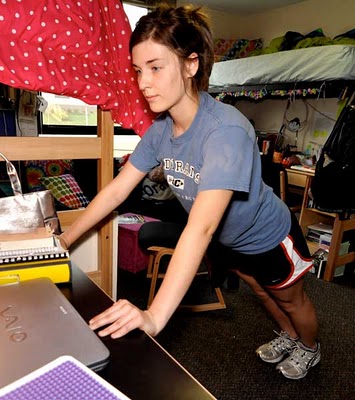
Photo by Sarah Andrews from kalisthenixfitnessblog.com

Strengthening exercises. Exercises like pushups, crunches, squats, and lunges are all relatively easy exercises you can do in small spaces. You can even add textbooks under your feet to make pushups harder. You may just want to be sure to add some padding under your back; dorm room floors aren’t that comfortable.

Stretching. While stretching itself won’t burn a lot of calories, stretching before and after your workout can help you with your workout. However, in an article we read in USA Today, you want to make sure that your stretches before you work out are more “active” stretches that mimic the movements that you’ll be doing in your workout.

Your workouts don’t have to be complicated.  Especially if you don’t have a lot of time, there are ways that you can still fit your workout in along with writing 2 papers and studying for exams.

Here’s a playlist we’ve put together to help you get pumped up for your workout:

1. Teenage Crime – Adrian Lux

2. Disco Heat – Calvin Harris

3. Night by Night – Chromeo

4. Jeffer – Boys Noize

5. Horsepower – Justice

6. Hearts on Fire – Cut Copy

7. Touch It – Daft Punk

8. Strict Machine – Goldfrapp

9. Elliot Uppercut – Jupiter

10. New Lands – Justice

11. Dancing on My Own – Robyn

12. Trash – The Whip

13. Work – The 2 Bears

14. Titanium – David Guetta featuring Sia

15. Take Over Control – Afrojack

Other References:

“The Best Workouts to Do in a Dorm Room” by Joshua Duvauchelle

“What Are Some Aerobic Activities I Can Do In My Dorm Room?” By Natasha Puryear

“Simple Dorm Room Exercises” by Shelley Frost

 “Does Stretching Burn Calories?” By Toby Pendergrass

Standard
Student Life

8 Ways to De-Stress in College

College can be overwhelming; it seems like you have a never-ending supply of homework, projects, and exams, and it’s difficult to manage all of that with a job AND a social life.  However, while you need to make sure you get everything done, you also need to make sure that you don’t get too overwhelmed or stressed.  This is why we’ve put together some suggestions to help you keep your cool.

Take a walk or go for a run.  Taking a short (or long, depending) walk or run will help raise your pulse, but will help lower stress. Exercising is a great way to release some of the built-up energy that you get from being stressed.

Clean your room.  Like taking a walk or going for a run, physical activity can be a great way to relieve some of the built-up energy you get from being stressed.  By cleaning, you can also prevent yourself from losing any important papers in a mess.

Hang out with a friend.  Hanging out with a friend can be one of the biggest stress relievers for college students, as their friends are often going through the college at the same time.  Whether you talk with your friend about what is stressing you out or not, being social and having a good time can help you forget a lot of your stress.

Indulge your hobbies.  College students sometimes get lost in all the work they have to do.  Whether it’s painting, photography, or playing an instrument, by taking time to do something you like to do, you will feel less overwhelmed by schoolwork.

Cook or bake.  By concentrating on your favorite recipe, you can relieve a lot of stress.  It’s also doesn’t hurt that you get to eat some really good food!

Take a drive.  Especially if you’re a first-year student, taking a drive cannot only be a great way to relieve stress, but it can also give you a chance to get to know where you live.  You never know:  You may find your new favorite hangout along the way.

Watch your favorite movie or an episode of your favorite TV show.  By taking a little while to just relax and watch your favorite movie or an episode of your favorite TV show, you can get your mind off your stress.  It will also give you a chance to clear your mind before getting back to work.

Breathe.  The best thing to do is breathe; you can get through all the stress.  Just remember to breathe and to take some time for yourself, and you can make it through even the toughest semester.

References:

“50 Ways to Destress in College:  Learn How to Relax Amidst the Chaos” by Kelci Lynn Lucier

“Top Ten De-Stressing Activities:  Tips to relax college kids, young adults and parents too” by Jackie Burrell

“20 Affordable Ways to De-stress” by Nina Kim and Georgia Price

“How to Deal with Test Anxiety:  College Student Tips for Overcoming Midterm and Final Exam Stress” by Naomi Rockler-Gladen

“How to Deal with Test Anxiety:  College Student Tips for Overcoming Midterm and Final Exam Stress” by Naomi Rockler-Gladen

Standard
Student Life

6 Tips to Landing an On-Campus Job

For students looking for work, on-campus jobs are not only a great way to make a little money, but they’re also a great way to meet new people.  On-campus jobs offer students a much more flexible environment, where their studies come first, while still providing them with valuable experience that they can take with them after they graduate.  However, for many students, it can be difficult figuring out how to get a job like this.  This is why we decided to put together some tips to help you find on-campus work.

Photo from kentwired.com

Don’t limit yourself.  You may not always find your “perfect” job, however, you can certainly find one that fits at least most of what you want.  Think of the skills you want to learn and what areas you might be interested in.  Even if it’s not in your major field, the experience can never hurt.

Follow up.  Be sure to follow up on any applications you have submitted.  If you haven’t heard back in a week, be sure to send a follow up email or phone call.  It won’t hurt to remind people of who you are, and your interest in the position.

Find openings by looking online, talking to your friends, and visiting departments.  Keep your eyes peeled.  While looking on your school’s website can help, it will certainly not hurt you to ask your friends, classmates, and professors as well.  Let them know about your interests and ask them if they know of any positions on campus.  You never know:  Their recommendation may help you get a job more easily.

Don’t give up looking if you don’t find something right away.  Don’t feel discouraged if you didn’t get your top choice for a job, or you aren’t finding what you want.  Student positions are always popping up, as students graduate and there is always a need for student help.

Be professional.  One of the major obstacles students face when looking for a job can be an unprofessional attitude.  Make sure you maintain a professional attitude, as this will go a long way with any potential employer.  Especially when taken seriously, this will not only be something you can put on your resume, but it will also help you shine in any recommendation your previous employers give you.

Take your job seriouslyAnother major obstacle for students is balancing school, work, and a social life.  While school should come first, you should also be mindful that you do have certain responsibilities that come with your job.  Take what you do seriously, as the experience you get from any job you hold will help you in the future.

For students, on-campus jobs can be a great way to make a little money in school, while not taking on so much responsibility that they get overwhelmed.  In many cases, on-campus jobs allow students the flexibility and the experience they need to make it to graduation.  While it may not seem easy at first, being professional, persistent, and keeping your eyes peeled can certainly help you on your way to landing an on-campus job.

References:

“How and Why to Get an On-Campus Job” by Julie Mayfield and Lindsey Mayfield

“Five Reasons Why:  You should get a job on campus” by Heather Huhman

“Tips to Getting an On-Campus Job” from UW River Falls

Standard
Student Life

ASK THE EXPERT: What are some of today’s biggest obstacles for college students?

For many college students today preparing themselves for the working world, it seems incredibly bleak. In general, unemployment rates are high (around 8.3% according to the U.S. Department of Labor), but this also extends to students. According to a recent Drexel University study, recent bachelor’s degree holders saw an increase in unemployment and an increase in underemployment, despite an overall increase in jobs. With such a discouraging job market, it’s not surprising that approximately 20% of graduates decide to continue on with their education.

However, according to David Pinkley, founder of The Resume Sage, the economy and unemployment aren’t the only obstacles recent college grads have to overcome. For Pinkley, another one of the greatest obstacles students have is the competition they face with more experienced individuals who are also looking for employment. These individuals often have extensive knowledge of the professional world, with a network that extends well beyond that of a recent college grad. According to Pinkley, “unless you’re doing cutting edge research, all you have is your attitude.” Students are especially at a disadvantage when it comes down to experience in a specific industry, even with the smaller price tag they command.

Another major obstacle Pinkley identifies is the media coverage detailing the decline in college graduate employment. Pinkley believes students are greatly impacted by reading these stories, obviously affecting their psyche and their hope for finding a job once they do graduate.

“You need to move your own mind from the fear that you won’t find work to the hope that you will,” says Pinkley. For him, this is really the only way that students can overcome these types of obstacles. It all really starts with enthusiasm, a bright attitude, and a lust for knowledge to be a student’s driving force when they are looking for a job, because as Pinkley explains, “ . . . all you have is your attitude.”

References

Fogg, Neeta, and Paul Harrington. “The Employment and Mal-Employment Situation for Recent College Graduates: An Update.” Center for Labor Markets and Policy. Drexel University, Jun 2012. Web. 21 Aug 2012.

“Labor Force Statistics from the Current Population Survey.” Center for Labor Markets and Policy. United States Department of Labor, n.d. Web. 21 Aug 2012.

Stone, Charley, Carl Van Horn, and Cliff Zukin. “Chasing the American Dream: Recent College Graduates and the Great Recession.” John J. Heldrich Center for Workforce Development. Rutgers University, May 2012. Web. 21 Aug 2012. <http://www.heldrichpodcasts.com/Chasing_American_Dream_Report.pdf>.

Pinkley, David. Telephone Interview. 20 Aug 2012.

Standard
Housing Advice, Student Life

Getting To Know Your New Home

If you’re heading off to college for the first time, you most likely will be finding yourself in an entirely new place.  It can be incredibly daunting if you don’t know anyone, you don’t know of any cool places to go yet, and you’re just starting off at your new school.  At JumpOffCampus, we’ve certainly been there, and that is why we’ve put together some suggestions for helping you get to know your new home.

Check the walkability score.  In one of Mark’s previous posts, he had mentioned using Walk Score to find cool places near you.  Not only will the site give you the rating of how walkable your city is, but you’ll also get a listing of all the restaurants, coffee shops, grocery stores, retail stores, bookstores, bars, and other entertainment venues right in your area.

If you’re a coffee lover, try CoffeeSeeker.com.  By simply putting in your zip code, you can find all the coffee shops right within your area.  That way you can even try all the coffee shops in your neighborhood to see which one you like the best.

Check local newspapers and other local publications for cool events and reviews.  One of the best resources you can use are the local publications in your area.  Not only can these give you listings of some of the local businesses near you, but they may also give you reviews of these places so you can determine if it would be a place you would like.  If you live in Boston or Providence, you may want to check out the Boston or Providence Phoenix, which will have a ton of cool listings right in your area.

Take a drive.  Another way to find intriguing places is to simply take a drive around and see where you end up.  This can also be a great way to get to know your new roommate, so take them along for the ride!

Avoid chain stores and shops for a while.  A great way to meet new people and find some great places is to avoid shopping in chain stores, or places you could find anywhere else.  It will not only open you up to your new city, but you may also find your new favorite coffee shop or bakery!

Although navigating a new place can be difficult sometimes, it’s best to try to take it all in stride.  While it won’t be easy at first, just hitting the web or taking a drive can help you ease the shock of living in a new place.

Standard
Student Life

Surviving the First Day of College

If this is the first time you’re heading off to college, it can be extremely terrifying heading off to class on your first day.  It’s certainly not like the first time you went off to high school; you don’t know many people (if anyone) and you are most likely lost as to where your classes are.  You may be concerned that the classes you are taking (if you’ve ever heard of that subject) are really going to be difficult and are going to be incredibly overwhelming.  It also doesn’t help that it seems every class you go to seems to throw scary policies at you that you may have never heard (or thought of) before, and include a workload that will leave you wondering, “Will I ever survive?”

Well, you will survive that day, and you can survive the rest of the semester.  It’s not all that bad.  Sure, the first day is a little scary, especially when you get a look at all the work you’ll have to do and all the policies you’ll have to follow.   However, it can be simple, and this is why we’ve put together some tips to help you to get through the scariest part of the semester so you can make it to the easiest:   The minute you pass in your final exam.

Take a walk around campus to find your classes the day before.  Although you may feel a little dorky, but it really helps; a lot of students on their first day get lost and end up getting to their classes late.  In an article at Surviving College Life, they explain that it’s a good idea to walk around campus the day before your classes start.  You can even bring a couple of friends or your roommate along with you.  It’s easier to find the buildings when you’re not pressed for time and stressed out.

Don’t be afraid to ask questions.  Whether it’s asking someone in your class if you’re in the right class, asking for directions to a building, or asking your professor for clarification, it’s important to ask questions.  Even if you feel weird about asking questions, you shouldn’t; all the other freshmen are in the same boat and so you’re not alone.  Be sure to get the facts so that you’re not wandering aimlessly around campus and miss your class, or that you end up in an art class when you were supposed to be in a business class.

Take a minute to meet the person next to you in all your classes.  This will not only give a buddy in all of your classes who can work with you on projects, but it will also give you someone to commiserate with when you think the test was too hard or you just can’t seem to get through that paper.  This will also give you someone to contact when you miss class or misunderstand something the professor said.

Don’t be intimidated.  The most important thing to remember about the first day, like we said, is that you’re not alone; there are plenty of other freshmen who are in the same boat as you.  It’s important to just avoid getting bogged down with trying to memorize all the policies, remembering when all of your assignments are due, or overwhelming yourself with the thought “How will I ever get through this?”  Make sure to have fun in your classes and to try to get something out of them.  College should be a great experience, and you shouldn’t let yourself get totally intimidated by all the work you have to do.  Just remember to keep your chin up, because you can get through all your work and have fun at the same time.

Standard
Student Life

Avoiding the Freshman 15: Eating Healthy In College

For college students, eating healthy is often far from their minds.  I mean, let’s be honest here:  The fact that you’re in class all day and have to study all night means that you’re not always going to make it to the dining hall to eat.   And who can resist that pizza at 3 am from the pizza place at the top of campus?  However, you have to remember that pizza won’t keep you looking trim.  This is why we’ve put together some suggestions to help you avoid the freshman fifteen.

Avoid late-night snacking.  A recent study at Northwestern University has actually proven that those who eat late at night gain about 28% more weight than those who eat during regular hours.  If you’re trying to avoid the freshman fifteen, it’s probably not the best idea to eat that pizza at 3 am.

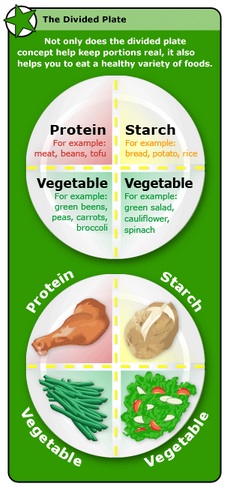
Eat balanced meals.  You should be splitting up your meals based on a balance of proteins, vitamins, minerals, carbohydrates and fats.  It’s significantly healthier for you to be eating a variety of foods, rather than just carbohydrates, even if you are eating fewer calories.

Keep a stock of healthy snacks in your room.  This will keep you from ordering out for pizza or heading down to the vending machine when you’re a little hungry.

Limit the fast food.  Even though it can be significantly more convenient when you’re on the run, it can be one of the leading causes of the freshman fifteen.  While it’s not friendly for your body, it’s also as equally unfriendly for your wallet.  In Debby Mayne’s article “Healthy Eating Habits for College Students,” she explains that if you do eat out, you should avoid French fries and other fried foods, and order a salad or sandwich that doesn’t contain on that fried and greasy meet.  She also suggests that if you’re ordering pizza, you stay away from pepperoni and add toppings like olives, mushrooms, green peppers and even Canadian bacon (it’s lower in fat than pepperoni).

Drink water.  According to an article by Yonika Willis at Livestrong.com, drinking more water can actually help you lose weight because it makes you feel fuller and helps you to avoid overeating.  Willis explains that by drinking eight 8-oz. glasses of water daily, you can burn off almost 35,000 calories a year, or about 10 pounds. It also doesn’t hurt to drink water throughout the day so you don’t become dehydrated.

Limit sugar.  Even though that Red Bull or that candy bar can get you through long nights of studying, it’s not the best idea if you’re trying to avoid the freshman fifteen.  Limit the foods and drinks that are full of sugar, and reduce the amount you put in your coffee and tea.

Avoid taking your coffee with cream.  Coffee is the lifeblood of the college student, but what many students may not know is that taking their coffee with cream could be added a significant number of calories and fat to their diet that they don’t factor in.  According to another article by Kristen McCarty at Livestrong.com, a typical medium coffee from a coffee shop is about 16 oz, and while the calories in black coffee is minimal, you add about 50 calories for every teaspoon of cream you put in.  Cream can also be anywhere 18 to 30 percent fat.  That’s why it’s better to start taking your coffee with skim milk (adds only about 10 calories per 2 tablespoons) or black, as it will add fewer calories.

While it’s important to be sure that you have a balanced diet, it’s also important to have fun.  Having pizza every now and then is certainly not a problem, but just keep in mind that everything should be in moderation.  It’s the all-the-time and the excess that will have you seeing the freshmen fifteen.

Other articles we referenced:

“Late Night Eating Linked to Weight Gain” by Tara Parker-Pope

Healthy Dining Hall Eating at KidsHealth.org

Healthy Eating in College:  How to Avoid the Freshman 15 at Freshman15.com

Standard