Meet Our University Partners

MEET OUR UNIVERSITY PARTNERS!

Meet Kevin Forti, the Director of Residence Life and Housing at Clark University!

What are the benefits you see of using JumpOffCampus?  How do you believe JumpOffCampus has helped Clark?

JumpOffCampus is a powerful tool for those Clark Students who wish to live off campus.  For upper-class students looking to move off campus for the first time, JumpOffCampus gives them a smart way to compare and contrast various apartment costs, locations, configurations, and amenities. JOC is especially helpful for incoming Graduate Students, especially those who are international and coming to Worcester for the first time.  Gone are the days of trying to help these students figure out how far a paper listing was from Clark, etc.  Now they can visualize and map properties, see photos of the actual rooms, etc.  It does things that our old-fashioned paper listing never could!

Where did you attend college?  What was your major?

I have a Bachelors of Science in Business Administration from Western New England University, and a Master’s of Education from Springfield College.  My undergraduate major was Technical Management, and my graduate program was Student Personnel Administration in Higher Education.

What does your job entail?

As Director, I manage all housing, operations, logistics, budgeting, strategic planning, hiring, and day to day management of Residential Life and Housing at Clark.

How long have you been working in housing?

I have over 12 years of experience in the field, including 8 years at Clark.

How did you get into the field of university housing?

I applied to be a Resident Advisor my Junior year of college, was hired, and never looked back.  From there I became a Residence Manager, an Area Coordinator, Assistant Director, and eventually Director.

What do you feel is the most important or difficult part of your job?

People don’t recognize that the summer is actually the busiest time for me by far.  During the academic year there is a lot going on, but it is paced out reasonably, whereas come the end of May, the pressure is on to be ready for August.  Take this summer.  Right now I am in the process of hiring 3 professional positions, building a multi-million dollar addition to two of our halls in a 12 week window, coordinating Graduate, First Year, Transfer, and Returning Student housing assignments, reengineering a number of protocols and procedures, on top of answering around 100 emails per day, mostly from students and parents asking all about housing stuff.  It is non-stop all summer long, and yet when I tell people I work at a University, they always think I must have summers off!

What is your favorite part of your job?

I love to re-engineer and improve on processes.  I also love the capital improvement, reinvestment and management aspects of my job.  Having a background in technical management, it makes sense that I really get a lot of joy out of renovation and improvement work.

Do you have a favorite moment from your work at Clark?

There are many, but I would say that the best ones are the times when I get to recognize the hard work and commitment that my professional and student staff put into residential living here at Clark.  I am fortunate to work with amazing people with tremendous talents, and I love being able to celebrate that.

What has been the best advice you’ve ever been given?

Don’t sweat the small stuff.  Life is too short to dwell on the bumps in the road, so shake them off and celebrate the great things that come your way.

What is your favorite college memory?

No comment 😉

What kind of music do you listen to?

Everything!  My iPhone has everything from Rap to R&B, Classical to Country, Techno to Theater.  I love all types of music.

What are your hobbies?

I love to build things.  I am a pretty good machinist and welder, and can make some pretty great stuff when I have the time.  A few years ago I custom built a Model T go-kart, and am working right now on machining my own wedding ring out of titanium.

What is your favorite saying?

Not really, probably don’t sweat the small stuff!

Do you have awesome or ridiculous stories from working at Clark?

[No comment ;)]

Standard
JumpOffCampus

MEET A MEMBER OF OUR TEAM: Rachel Goroff

Title: Marketing Intern

Job responsibilities:  Marketing research, promotion, sales

Favorite part of the job:  It’s interesting, I get to work on a bunch of different projects, and it’s fun to see the site grow!

College and major:  Bryant University- Marketing and management

Favorite type of music:  Anything but country

Favorite TV shows: Mad Men, Friends, The Office

Favorite movies: Pride and Prejudice

Hobbies: Traveling, Photography, Music

Favorite saying: Most of the shadows of this life are caused by our standing in our own sunshine. – Ralph Waldo Emerson

Standard
Student Life

Cool Products for College Students

We love cool services and products and so we’ve scoured the Internet to find some really awesome products that may be useful for you in this upcoming school year.

The Coffee Joulie These little shiny metal beans cool down your coffee quicker and keep it warm longer. They actually trap heat inside until your coffee becomes a delicious 140°F (the perfect drinking temperature), and then they will slowly release all the heat back into your coffee to help it stay warmer longer.

WOWee ONE Speaker This speaker isn’t just any old speaker. It actually has special hybrid technology that hits mid to high frequencies, and even the low end bass frequencies, around 3 octaves lower than other traditional speakers. The cool thing about this is that it holds a charge up to 20 hours, so you can listen to your music uninterrupted. It’s compatible with iPhone, iPad, and iPod.  http://www.woweeone.com

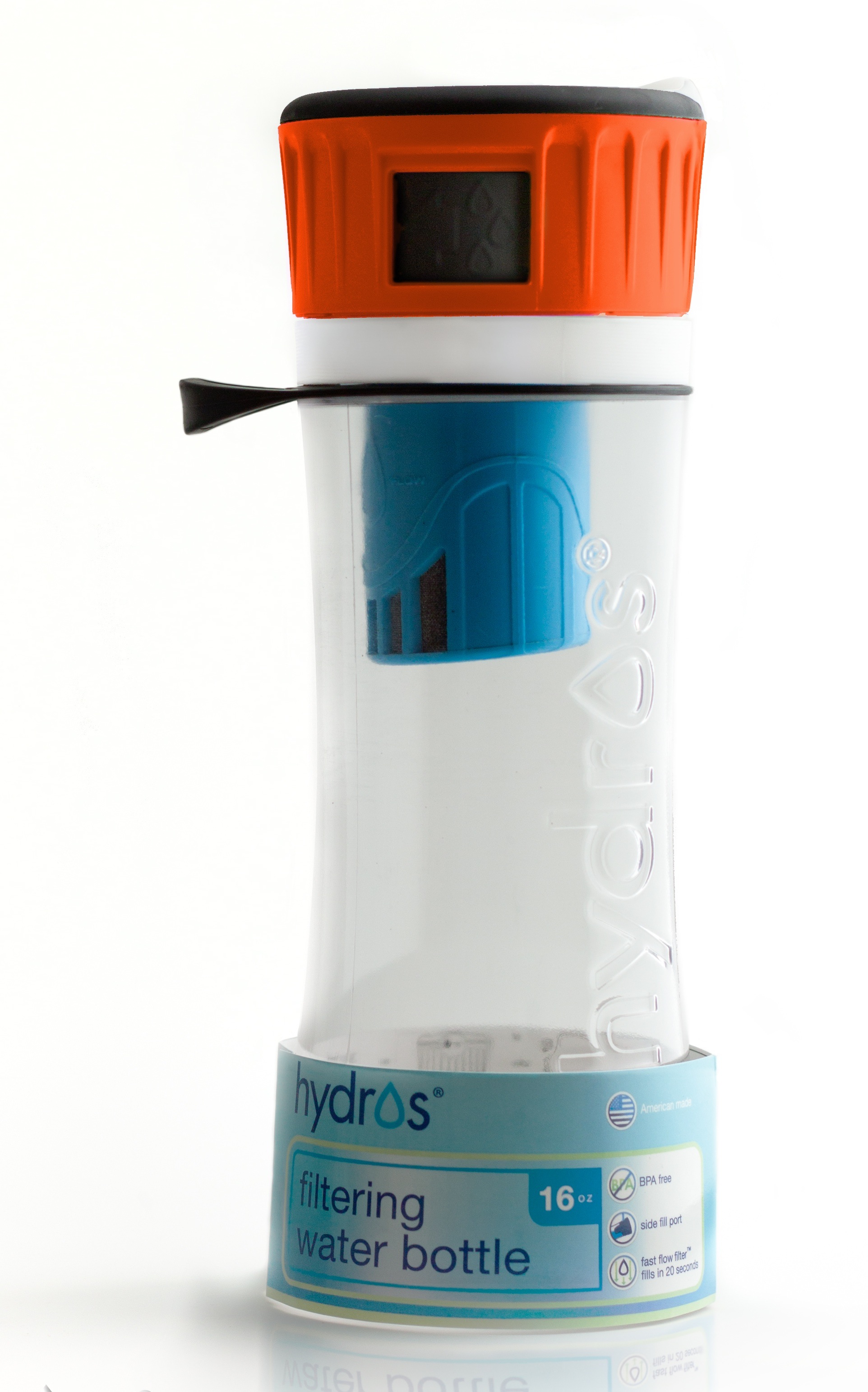
Hydros Filtering Water Bottle If you like the taste of filtered water, you’ll love this water bottle. It actually has a filter right in the bottle, so you can filter your water on the go. It also has fast filtering technology to make filtering your water easy. This bottle is BPA free, dishwasher safe, and it even has antimicrobial protection to help prevent odor causing bacteria. The other cool thing about this water bottle is that part of the proceeds goes to help fund a sustainable water infrastructure project to provide clean water to those in need. http://www.hydrosbottle.com

Yogi Support Pillow This pillow helps you to sit in a variety of comfortable positions. Especially when you have limited choices for studying spots, this helps making your bed a comfortable place to study.

Standard
JumpOffCampus

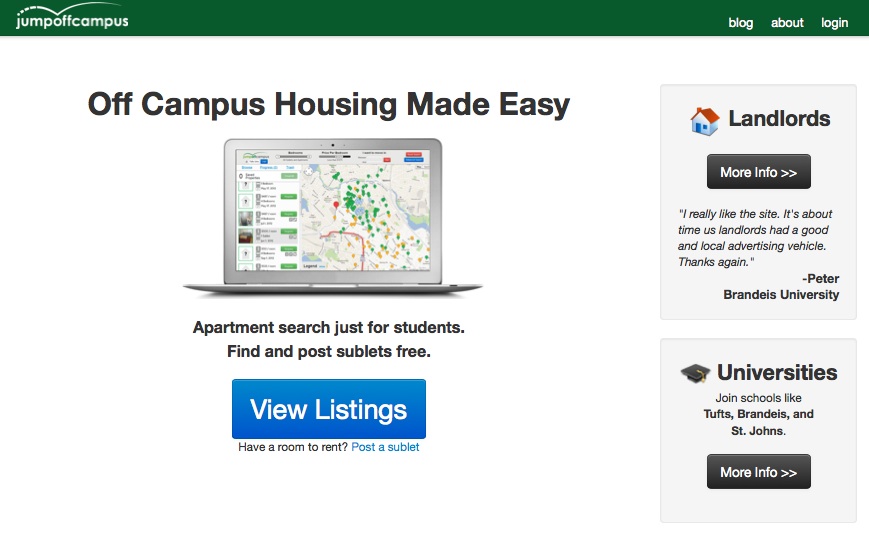
We’ve got a new look and some new features!

Our development team has been working tirelessly to make our website into a one-stop-shop for off-campus housing and keeping it looking good too!

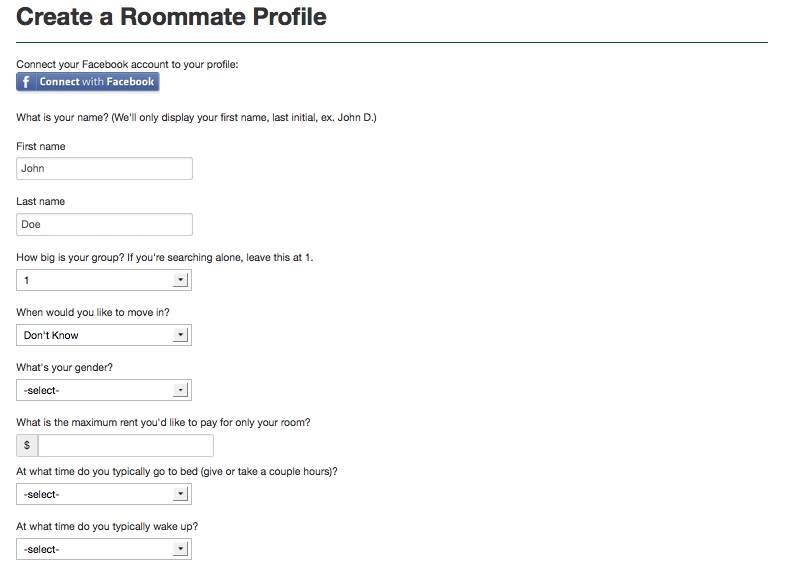
Not only do we have a new look, but we’ve also got a ton of new stuff!  We’ve recently added a new roommate finder, where you can match yourself with other students.  All you have to do is take our roommate-matching survey.  This survey is based on research that we’ve conducted in relation to what students look for in a roommate and what universities tend to include in their roommate-matching surveys.

Once you’ve answered the questions and created a roommate profile for yourself, you can search through other students’ profiles who also attend your school.  We’ll even give you a compatibility score for each of the profiles you view so you know how compatible you and that person would be as roommates!

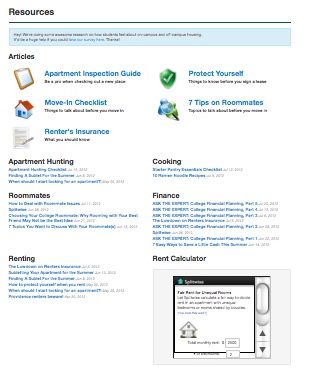
Last, but not least, we’ve added a ton of new stuff to our resources page.  You can view our blog entries and articles we’ve written that directly pertain to college students.  These resources will help to inform you about some of the most important things to consider when it comes to off-campus living.

This isn’t the end of it either!  We’ve got a lot of great stuff planned, so be sure to keep checking our website at www.jumpoffcampus.com!

Standard
Uncategorized

We need your help!

We’re still looking for participants for our survey!  Just clink the link below to take the survey!  https://docs.google.com/spreadsheet/viewform?formkey=dGJqMjBHZjIyRGluNDlkbllsUFVQRlE6MQ#gid=0

Standard
Ask the Expert, College Planning, Finances

ASK THE EXPERT: College Financial Planning, Part 5

For the last part of our college financial planning series, we wanted to know what students should consider when they are repaying their loans and what they should do if they have accrued a large amount of debt.  We once again spoke with Mark Kantrowitz, publisher of FinAid.org and FastWeb.com, to help us answer these questions.

The first thing Kantrowitz advises is that if a student can make the required monthly payments and accelerate their payment of the loan, then they should consider making extra payments on the loan with the highest interest rate (after making the required payments on the loan). While not everyone can do this, students who can will pay off their loan earlier, reduce the interest accrued on the loan, and ultimately save a significant amount of money.

If a student runs into financial hardship and is unable to make their monthly loan payments, Kantrowitz advises students to speak with their lender immediately to find out their options.  For federal loans, in particular, there are a variety of options that will help them to continue to make payments without causing too much financial strain.

The first option for federal loans is a temporary suspension of repayment, such as a deferment or forbearance.  Kantrowitz explains that this is an option best suited for those who experience temporary or very short-term financial hardship, which could include things like short-term job loss, mental leave, maternity leave, etc.  The problem with this option is that the interest on the loan will continue to accrue on at least a portion of the loan, which will increase the size of the loan.  However, Kantrowitz explains that this will not be a major problem should one require this assistance for only about 3 or 4 months, as not much interest will have accrued over that time.  He advises that students not extend this type of assistance for much longer than that, and explains that this type of assistance will also have only a 3-5 year limit (depending on whether it is a deferment or forbearance).

For those requiring more long-term assistance on their loan, Kantrowitz advises students to choose an extended or income-based repayment plan. The extended repayment plan will reduce the monthly loan payment by extending the term of the loan.  For example, if a 10-year unsubsidized Stafford loan’s repayment term is increased to 20 years, this will cut the monthly loan payment by one-third.  However, Kantrowitz explains that this will also double the interest paid over the term of the loan, and will ultimately increase the total amount you pay on the loan.  “The longer the term of the loan,” says Kantrowitz, “the more you’ll pay.”

The second long-term option for repayment would be the income-based repayment plan.  This repayment plan will base the monthly loan payment on 15% of one’s discretionary income.  According to Kantrowitz, discretionary income is defined as the amount by which one’s income exceeds 150% of the poverty line.  Therefore, if your income is below that amount, your monthly loan payment would be $0.  However, this option also extends the term of the loan and can end up increasing the amount you pay over time.

According to Kantrowitz, there are a few benefits to choosing the income-based repayment option.  He first explains that this is a good safety net should one run into financial difficulties and become unable to make monthly loan payments.  This option is also beneficial in that after 25 years of repayment, all remaining debt will be forgiven (a feature not offered by private lenders).  In fact, a new version of the income-based repayment will reduce the percentage of discretionary income charged from 15% to 10%, and it will shorten repayment from 25 to 20 years before the remaining debt will be forgiven.  Kantrowitz also explains that should one work in the field of public service [jobs such as a teacher, public defender, prosecutor, member of the military, city, state, or federal worker, or for any 501(c)(3) charitable organization], then all remaining debt will be forgiven after 10 years of repayment.

According to Kantrowitz, students should avoid defaulting on their loans as this can greatly limit their options.  In fact, in many cases, it will actually get much more difficult to repay the loan as there are many ways in which the debt will continue to be collected.  One way in which this is done is through a wage garnishment of up to 15% of total discretionary income.   This can also be done through the interception of federal and state income tax refunds.  On top of this, there will also be an increase of the term of the loan by almost 100%, in that 25% of each payment made (whether voluntary or involuntary) will be used to pay collection charges.  Therefore, a student will not only have to pay off the principal of the loan and the interest, but also the collection charges that come with defaulting on the loan.

Overall, there are things students can do before they run into trouble paying back their loans.  As mentioned previously, talking to one’s lender is perhaps the most important step whenever they are experiencing financial difficulties or hardship.  While their options may increase the amount they pays on the loan, it will prevent students from both going into significant debt and forcibly making payments on their loans.  By choosing to repay loans in these ways, students can greatly limit stress and misfortune by repaying their loans in the way that is right for them.


Standard
Student Life

Standard Vs. Green Cleaning Products

Walking down the aisle in the grocery store, you may come across the “green” cleaning section, where all of the packages proclaim their “all natural” and “environmentally friendly” qualities.  However, what do we really know about these products and do they really work?  We’re a little skeptical.

In an article we read by Nina Rastogi from Slate magazine, she explains that the EPA serves as the major decision-maker when it comes to deeming a product as a disinfectant or sanitizer that appropriately kill food-borne microbes.  In fact, Rastogi observes that none of the larger green cleaning brands (Seventh Generation, Method, Ecover, or Clorox’s Green Works) offers an EPA-registered disinfectant or sanitizer.  Why this is isn’t entirely clear, however, many other smaller companies like PureGreen24 offer EPA-approved products that are effective in disinfecting and sanitizing.

It appears that household remedies don’t appear to be as effective either.  According to a 2000 study Rastogi cites, researchers tested some of the most widely accepted household remedies to cleaning, including the use of vinegar and baking soda.  The study, in fact, found that vinegar was as effective as commercial household cleaners at killing salmonella and Pseudomonas aeruginosa (bacteria found in produce), but was not effective when it came to staph or E. coli.  Baking soda seemed to have no effective on any of the pathogens.

So it may seem here there really isn’t a clear conclusion, however, in either case, it remains that standard cleaners are pretty scary.  In an article we read by Andrea Thompson at Live Science, she explains that there are 80,000 chemicals in use and some of the toxicity of these chemicals has not yet been determined.  In her article, she interviewed Tom Natan, a chemical engineer at the National Environmental Trust, who says that, “We are exposed, in the process of cleaning our homes, to more than the manufacturers projected.”  In fact, he says that companies will often select ingredients to increase performance, but “a lot of the chemicals, we simply don’t know anything about.”  Natan has had some experience with this, as he and his team recently found that a popular commercial cleaner they had tested caused damage to the reproductive systems of pregnant rants, even in small doses. That’s not comforting.

We can therefore determine that maybe using standard household cleaners is not the best choice.  While green cleaning products, as we observed in our blog entry yesterday, are 67% more expensive than standard cleaning products, are they really worth it?  As Rastogi also points out, many of these products are not yet efficiency approved by the EPA, so that means we aren’t entirely sure yet if they really kill harmful bacteria.  So perhaps the best decision here is to stay (FAR) away from standard household cleaners.  It appears here that the best alternative may be using EPA-approved green cleaners.  Rastogi also advises that basic hygiene practices like hand washing, keeping cutting board separate from raw meat and poultry, and storing food at the proper temperature will help to keep things clean.  You don’t need to douse everything in disinfectant every time you clean; instead you can clean by using simple soap and water to decontaminate many kitchen surfaces.  She advises to use cleaning products in areas where you really need them, and to use them  cautiously and only when you really need.

Standard
Budget-Friendly Ideas, Student Life

Greener Living on a College Budget

As a college student, while you may want to have a more “green” lifestyle, your ramen-noodle-every-night budget may restrict you from actually living a sustainable lifestyle.  Let’s face it:  you most likely won’t be going out to buy a brand new hybrid car, or putting solar panels on top of your apartment. In fact, when we compared standard cleaning products to natural or “green” cleaning products at Walmart and Target, we found that there appears to be an average of about 5 cent increase in price per fluid ounce or count.  That’s on average about a 69% increase in price!  That’s pretty significant when you’re already living on a limited budget!  This is why we decided to find some ways to help you live green, because it just doesn’t really make sense:  why does it cost you more to live a green lifestyle when it should actually save you money?

Use public transportation when you can, instead of driving.  In an article we read by Cecille de la Cruz at Suite 101, she explains that the less gas you use, the more you’ll save.  Especially with climbing gas prices, paying for a bus or commuter rail ticket could end up saving you hundreds of dollars per year and will help you live a more sustainable lifestyle.

Avoid wasting water when washing dishes.  In another article we read by Jen Boulden and Heather Stephenson, they explain that you can maximize your use of water by scrubbing dishes in stages.  Instead of running the water, you can fill one half of the sink (if you have a double sink) or a large container with soapy water to first scrub the dishes.  You will then only have to run the water when you rinse.

Avoid wasting water when you brush your teeth.  Boulden and Stephenson explain that by simply turning off the faucet while you brush your teeth, you can save up to 10 gallons of water per day.  That’s pretty significant, if you really think about it!

Take showers instead of baths.  Boulden and Stephenson explain that baths take about 50 gallons of water, while a 5-minute shower could only use about 20 gallons.  This is a great way to conserve water and to avoid high water bills.

Turn off lights and appliances when not in use.  In an article we read on the TLC website, a TV left on uses 100 watts per hour, a DVD player uses 12 watts per hour, a modem uses 14 watts, a standard PC uses 130 watts, a ceiling fan uses about .1 kWh per hour, and a space heater, and a space heater uses about .09 kWh per hour.  By turning these appliances off, you could significantly conserve energy and potentially save yourself hundreds of dollars a year in electric bills.

Use cold water to wash clothes.  According to de la Cruz, using cold water to wash laundry will leave them cleaner and will help you to save money and energy.  In fact, she explains that it can even prevent clothes from wearing and tearing easily.

Recycle and re-purpose.  Taking the time to recycle cans and bottles is worthwhile, as those materials can be used to make other products.  However, you can also reuse and re-purpose products around your home.  For example, if you still get plastic bags when you go shopping, you can reuse those bags later as garbage bags or to carry other things.  They don’t have to go immediately into the garbage.

Standard
JumpOffCampus

We need your help!

We’re still looking for participants for our survey in relation to on- and off-campus housing!  Just click on the link below to take the survey https://docs.google.com/spreadsheet/viewform?pli=1&formkey=dGJqMjBHZjIyRGluNDlkbllsUFVQRlE6MQ#gid=0

Standard
Housing Advice

Reducing Home Allergens

While allergies symptoms can range from mild to severe, according to the Asthma and Allergy Foundation of America, approximately 60 million Americans suffer from asthma and allergies.  Approximately 40 million suffer from indoor/outdoor allergies as their primary allergy.  The most common triggers being trees, grass and weed pollen, mold, dust mites, cockroaches, and cat, dog, and rodent dander.   Food allergies account for approximately 6% of allergy suffers, and the most common triggers are milk, soy, eggs, wheat, peanuts, tree nuts, fish, and shellfish.

If you have allergies, you may have experienced sniffling, sneezing, watery eyes, headaches, or worse.  It can be a very unpleasant experience when you your allergies flare up.  While there isn’t much you can do to rid yourself completely of your allergies, there are certainly some simple things you can do around your home that will help to reduce allergens.

Use an allergen impermeable cover to enclose your mattress, box spring, and pillows.  In an article we read by Mikki Hogan at The Allergy Spot, the first area you want to consider is your bed and your bedroom.  Dust and dust mites found on your bed can be a major trigger for your allergy symptoms.  These covers will help trap any allergens that may be on your mattress, and will prevent them from being inhaled.

Wash sheets, pillowcases and blankets in hot water at least once per week.  Hogan explains that hot water will kill all dust mites and removes allergens from the fabrics.  By accompanying this with hypoallergenic fabrics, you can greatly reduce the potential for your symptoms to flare up.

Vacuum floors regularly.  By vacuuming carpeting and other flooring, you can greatly reduce dust and other allergens that can accumulate.  You can use dry carpet cleaners to further remove allergens.  According to Hogan, shampooing carpets can leave residual moisture than can increase dust mite growth.  You may also want to consider using a vacuum with a HEPA filter.

Dust regularly.  Be sure to dust every area that could potentially collect dust.  You may also want to consider clearing any clutter or messes regularly to prevent the collection of dust.

Wash curtains and blinds monthly.  In another article we read by Clean Air Plus, when purchasing curtains, you will want to consider washable fabrics so that you can wash them safely without damaging them.  You will also want to take a clean washcloth and wipe down window blinds.  Both curtains and blinds are primary locations for dust collection.

Regularly vacuum and clean furniture.  Ensuring that couches, tables, shelves, etc. are regularly cleaned will also help to greatly reduce dust and other allergens.  Be sure to remove the appropriate cleaners for woods and fabrics.  Vacuuming can be especially helpful on cloth-based furniture.

Regularly clean shower and tub areas.  Because these areas are generally damp, they can become breading grounds for mold and mildew.  To ensure that mold and mildew do not build up, regularly clean these areas with the appropriate cleaners.

Avoid opening windows when pollen is active.  This is pretty self-explanatory, but this will help ensure that no pollen gets in and it will decrease the number of allergens inside your home.

Standard