Housing Advice

Apartment Security

In our experience, locking the door for college students seems to be a problem sometimes.  We’ve heard many stories when we were in college of students getting their possessions stolen simply because they or their roommates had left the door open or unlocked.  This is why we decided to give you some tips to make sure that it doesn’t happen to you.

Gauge the safety of the area you live in.  You can check local police logs to see where crime is occurring in your area.  If you notice someone has been robbed only one block over from your apartment, you will want to be especially careful.  In an article we read at My First Apartment, they suggest using websites like Everyblock which will also help you to gauge the relative safety of your neighborhood.   They also advise you to be aware of suspicious people who may be casing your apartment, and to consider your risk tolerance.  This means that if you know you live in an area that is a little sketchy, you understand that there will be risks.

Make sure your apartment and your building has working locks.  You want to make sure that the locks to your apartment and to the building work before you start moving in your things.  Be sure to examine the locks to ensure that nothing seems to be broken.  Then you’ll want to lock yourself out (with someone still inside who can let you in), and try to break in (without damaging anything).  You want to make sure that you can’t break into your apartment.  If you notice anything, or you find it to be really easy to get in, you’ll want to let your landlord know immediately.

If you don’t have a deadbolt, ask your landlord to install one.  In another article we read at My First Apartment advises that this is the most important piece of security for an apartment.  Deadbolts are much more difficult to pass, as they require a significant amount of force to be opened.

Don’t let people into your apartment or your building who you don’t know.  You should not open the door for anyone you don’t know.  Before you open the door, it is important to ask who it is.  You should also beware not to let anyone into your building who you don’t know.  If someone approaches you looking to get into your apartment building because they “locked themselves out” and you don’t know them, you shouldn’t let them in.

Be sure to store important and expensive valuables out of sight and in not-so-obvious places.  In one of the articles we read, they suggest that you make sure that you store things out of sight so that if someone were to break into your home, that they may not be able to find all of your jewelry in one obvious spot.  You may also want to be sure that no one can see the giant flat screen sitting in your living room.  Especially if you have a first floor apartment, you’ll want to make sure that you draw the blinds so that no one can see in and that you may have added security on your windows and doors (i.e. bars or extra security locks).

Talk with your roommate(s) beforehand about security.  Although it sounds a little strange, you want to know beforehand if your roommate never locks the door.  Sit down together and discuss how the security for your place should be handled.  Can you leave the door unlocked if you just ran outside for 5 minutes?  Can you leave the door unlocked when you’re home?  Whose responsibility is it to make sure the door is locked at night?  You’ll also want to talk about the aforementioned items we’ve listed here and develop a strategy as to how you and your roommate(s) can prevent your pad from becoming an easy and obvious target.

Standard
Ask the Expert, College Planning, Finances

ASK THE EXPERT: College Financial Planning, Part 4

For the fourth installment of “Ask the Expert: College Financial Planning” series, we wanted to know how college housing choices effect financial aid decisions. To find out more, we spoke again with Mark Kantrowitz, college financial planning expert and publisher of FinAid.org and FastWeb.com.

According to Kantrowitz, room and board are factored into the cost of college attendance, making it an expense covered by a student’s financial aid package. If a student chooses to live on-campus, their room and board would be based on the dormitory fees and the standard meal plan fee. If the student chooses to live at home with their parent(s) or guardian(s), rarely will they receive any financial aid for their housing accommodations.

If the student lives in an off-campus property (other than at home), the student will be afforded an allowance within their financial aid package to cover the cost of their housing. However, this price will be an arbitrary average rent price that is based on occasional rent surveys, and as Kantrowitz explains, universities are very reluctant to change these figures once they have been set. This means that if a student chooses to live in a property that is more expensive than the housing allowance, the university will not alter their allowance to accommodate the greater price. The only circumstances in which Kantrowitz sees this change being made is when the student has extenuating circumstances, such as a disability or having a dependent, which would require them to choose a more expensive residence.

For this reason, Kantrowitz advises students to try to stay within their budgets when it comes to off-campus housing. He explains “Just because you have an allowance that says you can pay up to this amount per month for rent, doesn’t mean that you should spend that amount. This is because in most cases the money that you’re spending on your living expenses is going to come in the form of loans, not grants.” By spending up to the allotted amount or above that amount, this will not only increase the student’s expenses per month, but it will also increase the amount of debt the student will have to pay off when they graduate.

Standard
Cooking, Housing Advice

Starter Pantry Essentials Checklist

When you’re moving off-campus for the school year, there are a lot of things to consider.  If your living in an unfurnished pad, in particular, there are a lot of things you have to remember to pack.  While it’s important, I’m sure many of you may forget the important essentials you’ll need to stock your pantry with when you move in.  It’s not like at home where your mom always had some chicken noodle soup in stock.  You’re on your own!

Knowing from our experience, we wanted to make sure you weren’t left out in the cold if you didn’t get to go grocery shopping one week.  Thanks to a couple articles we read at MyFirstApartment.com, we’ve come up with a list of things that every college student living off-campus needs to keep themselves fed.

  • Canned beans
  • Canned soups
  • Canned tomatoes
  • Pasta sauce
  • Spices (you at least want garlic powder, onion powder, salt, and pepper)
  • All-purpose flour
  • Sugar
  • Vanilla extract
  • Baking powder
  • Baking soda
  • Vegetable oil (optional)
  • Olive oil
  • Vinegar
  • Dried pasta
  • Instant oatmeal
  • Mustard
  • Ketchup
  • Coffee/Tea
  • Cereal
  • Honey
  • Hot cocoa
  • Rice

The articles we referenced:

http://www.myfirstapartment.com/2011/10/first-apartment-pantry-essentials/2/

http://www.myfirstapartment.com/2005/11/starter-pantry-and-staples-checklist/

Standard
Housing Advice, Roommates, Student Life

How to Deal with Roommate Issues

Let’s be honest here:  You and your roommate(s) are never going to see eye to eye on everything.  Whether it is about doing dishes, who’s buying the paper towels, or whether they can have friends over at 12 am on a Tuesday night, things are going to come up that you just won’t agree on.  However, you certainly don’t want to end up in a bickering match or giving each other the silent treatment for the rest of the year.  This is why you need to be prepared before it comes time for you to have a talk.  In an article we read at MSN.com, they gave some tips on how to talk with your roommate when problems arise:

  • Avoid passive aggression.  The sticky note you leave your roommate detailing their wrong doings never goes over well (beware not get yourself on this site!).
  • Emphasize the positive.  Before you talk with your roommate, be sure to make a list of their positive qualities.   This will help to remind you what you like about them, and it will help keep you positive when you talk with them.
  • Consider how you could be contributing to the situation.  Usually issues in a relationship are never black and white.  Maybe your roommate never does the dishes because you never do.  You will want to consider how you could make changes too.
  • Be prepared.  NEVER GO INTO A SITUATION LIKE THIS UNPREPARED.  I repeat:  NEVER GO INTO A SITUATION LIKE THIS UNPREPARED.  This is perhaps the most important item on this list.  If you go into a situation like this with your roommate and you have not thought about what you are going to say beforehand, a myriad of (not-so-good) things can happen.  However, what will most likely happen is one of two things:  1) you won’t actually say what you meant to say, or 2) you won’t say it right and it will cause more friction between you and your roommate.  Be prepared!  Think about what you want to say and how you want to approach the situation.  You’ll also want to consider their possible reactions and how you will approach their responses.  You may even want to write down some notes and practice what you’ll say beforehand.  You don’t have to be afraid to talk with your roommate; you just have to be prepared.
  • Pick a comfortable location and time to talk.  You want to pick a time and place where both you and your roommate will be relaxed.  You may even want to set up a time with your roommate to talk with them.  This will help to prevent any outside influences (work, school, etc.) from affecting the outcome of your talk.
  • Be tactful, even-tempered, and clear.  Be clear about what you want to change, and make sure there are no “grey” areas.  You want to keep a cool head and be strategic about how you say what you need to say.  At least then one of you will be levelheaded.
  • Use “I” statements versus “you” statements.  Be sure to avoid focusing the discussion on what your roommate is doing wrong.  Instead focus on how the situation and their behavior makes you feel.  This way you’ll prevent them from shutting out what you are saying.
  • Don’t wait too long to talk to them.  Talk to them within a reasonable amount of time.  If your roommate had a party while you were away, you don’t want to wait 3 months after the fact.  Talk to them within a couple days of when you return.  This way it will be fresh in both of your minds, and it will prevent any future incidents.
Standard
Apartment Hunting, JumpOffCampus

Apartment Hunting Checklist

Whether it is your first time renting or not, it can be difficult to determine what you should be looking for when it comes to your apartment search.  There are a lot of factors to consider, and this is why we’ve put together a checklist for you to bring with you when you start your search.

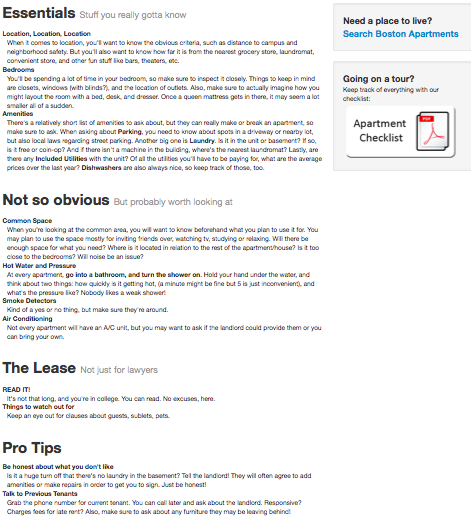
The checklist we’ve designed helps you to keep track of what the apartment includes, and provides you with a way to compare different properties all at once.    We have also included insider tips on the obvious and the not-so obvious things you should be looking for when you visit a property.

A checklist like this is a useful tool when you start your apartment search.  You should never rent an apartment based on appearance only, and you should never rent an apartment just based on photographs.  We always suggest that you actually visit the listing before you sign on the dotted line.  It is important that you make sure that the property is exactly as it was listed and that it fits your needs.

To download a copy of our checklist and to view other tips on apartment hunting, go to http://jumpoffcampus.com/resources/checklist.

Standard
Budget-Friendly Ideas, Cooking, Student Life

10 Ramen Noodle Recipes

Photo from ramennoodlerecipess.com

Ramen noodles are the college student’s best friend; they’re cheap, they’re quick to make, and they’re tasty.  However, after a week of ramen noodles for dinner, you may get a little tired of them.  This is why we’ve decided to share some awesomely easy ramen noodle recipes you can try to spice up your meal!

The Ramen Breakfast Burrito

2 cups water

1 (3 ounce) package of ramen noodles

1 egg

¼ cup shredded cheese

1 flour tortilla

hot sauce

Directions:

  1. Boil 2 cups of water.
  2. Crack and beat the egg.
  3. Add the ramen to the boiling water, and then slowly pour in the beaten egg.
  4. Leave on heat for 3 minutes while stirring.
  5. Drain all but about 1 tablespoon of water from the pot.
  6. Add the ramen seasoning packet, along with the cheese and your desired amount of hot sauce.
  7. Wrap the mixture in a flour tortilla and enjoy!

Chicken Ramen Noodle Salad

2 packages of ramen noodles

2 boneless chicken breasts

½ cup of croutons

¼ cup of shredded bacon

½ cup of Caesar salad dressing

4 cups of water

Directions:

  1. Pour 2 cups of water into a pot and bring to a boil.
  2. Once the water is boiling, add in both ramen noodle packages.
  3. Cook for 2-3 minutes, or until noodles are tender and have separated.
  4. Take the noodles off the heat and strain out the water.
  5. Cook the chicken in a pan until fully cooked.
  6. Remove the chicken from the pan once done and add it to the noodles.
  7. Add croutons, shredded bacon and dressing and then enjoy!

Doritos Ramen Salad

1 package of ramen noodles

1 small bag of Doritos

½ lb. of ground beef

1 cup shredded cheddar cheese (optional)

taco seasoning (optional)

Directions:

  1. Put 2 cups of water into a pot and bring to a boil.
  2. Once the water is boiling, add the package of ramen.
  3. Cook for 2-3 minutes, or until the noodles are tender and separated.
  4. Take the noodles off the heat and strain out the water.
  5. Place beef in a pan and cook.  Be sure to fully cook!
  6. Once its done, mix together with the noodles.
  7. Place the Doritos around the mixture in a circle, and crumble any chips you have left on top of the mixture.
  8. Add shredded cheese and taco seasoning and enjoy!

Ramen Chicken Parmesan

2 packages of ramen noodles

4 cups of water

2 chicken breasts (boneless and skinless)

2 eggs (beaten)

½ cup of milk

1 cup dried bread crumbs

½ cup of grated Parmesan cheese

1 cup of mozzarella cheese

2 cups of spaghetti sauce

2 tablespoons of olive oil

salt and pepper

Directions:

  1. Put 2 cups of water into pot and boil
  2. Once the water is boiling, add in ramen packages
  3. Cook for 2-3 minutes or until the noodles are tender and separated
  4. Take the noodles off the heat and strain out the water.
  5. Mix together milk and eggs
  6. Pound the chicken breast until they are ¼ inch thick
  7. Dip the chicken breasts in the milk and egg mixture, and then dip into the bread crumbs.
  8. Place the olive oil and chicken into a skillet.
  9. Cook until the chicken is brown on both sides and the meet is fully cooked.

10. Remove the chicken from the pan, and add the spaghetti sauce into the skillet where you just cooked the chicken.

11. Once the spaghetti sauce is warmed, add the chicken back onto the skillet.

12. Add the mozzarella and Parmesan cheese to the top of the chicken and heat until melted.

13. Add the ramen to the skillet and cook for 1-2 minutes in the spaghetti sauce.

14. Remove from the heat and enjoy!

Caramel Ice Cream Ramen

1 package of ramen noodles (crushed)

2 cups of caramel ice cream (or any other flavor)

1/3 cup of vegetable oil

Directions:

  1. While the noodles are still in the package, break the ramen into small pieces.
  2. Put the vegetable oil in a pan and cook until the oil is heated
  3. Put the noodles into the pan with the oil and gently shake the pan as they cook.  Be careful not to burn them.
  4. Once the noodles have browned, you can remove them from the pan.
  5. Put your desired amount of ice cream into a bowl.
  6. Add the fried ramen to the top of the ice cream and enjoy!

Ramen Frittata with Ham and Cheese

2 (3 ounce) packages chicken flavored ramen noodles

1 tablespoon butter

6 eggs

4 thin slices deli-style ham, cut into medium dice

3 green onions, thinly sliced

½ cup shredded mild cheddar cheese

Directions:

  1. Preheat oven to 400 degrees F.
  2. Follow ramen cooking instructions and cook until noodles are tender.
  3. Strain out the noodles from the water.
  4. Melt butter in a large ovenproof skillet on medium-high heat.  Add ham and green onions and cook until tender (about 3 minutes).
  5. Whisk eggs and 1 packet of the ramen seasonings into a bowl and stir in cooked noodles.
  6. Shake skillet to evenly distribute ham and green onions.  Add egg mixture and sprinkle top with cheese.
  7. Transfer skillet to preheated oven and bake until eggs are set and the cheese has melted (about 6-8 minutes).
  8. Serve and enjoy!

Vegan Ramen and Rotel

3 oz package of ramen (any flavor)

10 oz can Rotel mild or original

2 tablespoons nutritional yeast

2 tablespoons margarine

water

Directions:

  1. Crumble the ramen noodles while still in the package and then pour into a bowl
  2. Sprinkle the nutritional yeast over the crumbled noodles
  3. Open a can of Rotel and pour over noodles.
  4. Add ¼ can of water
  5. Cook in the microwave on high for 6 minutes
  6. Stir in margarine and enjoy!

Vegetarian Pad Thai Ramen

2 ramen packages

1 16oz package of extra firm tofu

1 bag frozen stir fry vegetables

soy sauce

sesame oil

peanut sauce

Directions:

  1. Drain tofu and slice or cube into bite-sized pieces
  2. Place into a bowl and add 1 ramen flavor packet with soy sauce.
  3. Shake in sesame oil and allow tofu to marinate for 1 to 2 hours
  4. Cook ramen noodles according to instructions on the package.
  5. Cook frozen vegetables by stir-frying until done.
  6. Add tofu with enough of the remaining liquid to pan and continue to heat.  Stir gently until heated.
  7. Add ramen noodles and mix well.  Allow noodles to absorb remaining liquid in the pan.
  8. Remove from the pan, season with more sesame oil and peanut sauce and enjoy!

Girl Scout Thin Mint Ramen on a Stick

4 packages of uncooked ramen

1 16oz bag of dark chocolate chips

14 drops of peppermint extract

2 drops of spearmint extract

2 drops of wintergreen extract

24 lollipop sticks or popsicle sticks

½ teaspoon butter (optional)

Directions:

  1. Empty package of ramen into a bowl and crush until it has the consistency of bulky oatmeal or rice crispies.  Do not crush finer as the recipe will not set.
  2. Lay out wax paper.
  3. In a saucepan, melt chocolate chips until they become smooth and creamy.
  4. If desired, add butter.
  5. Slowly add mint extracts to the chocolate, and stir for 1 minute.
  6. Quickly pour over crushed ramen and stir vigorously until completely covered.
  7. Immediately spoon mixture in tablespoons onto wax paper to form round cookie shapes.  Mixture should flatten and spread considerably, so be sure to leave plenty of space in between.
  8. Place a lollipop or popsicle stick into each cookie before it harden.
  9. Allow to cool completely for about an hour and then enjoy!

Taco Ramen Salad

1 package beef ramen noodles

½ lb ground beef

1 small tomato, chopped

½ cup onion, chopped

1 cup cheddar cheese, shredded

Thousand Island dressing

Directions:

  1. Cook noodles according to instructions listed on package.
  2. Cook beef in a pan until fully cooked and browned.
  3. Drain beef.
  4. Stir in ½ seasoning packet.
  5. Stir in onion, tomato, cheddar cheese, and noodles.
  6. Add dressing and enjoy!

If you’d like to find out more about where we found these recipes, just click on the recipe title!

Standard
Ask the Expert, College Planning, Finances

ASK THE EXPERT: College Financial Planning, Part 3

For the third installment in our college planning series, we wanted to know what were some of the biggest issues encountered by students when applying for financial aid.  Once again, we spoke with Mark Kantrowitz, publisher of FinAid.org and Fastweb.com and expert on paying for college, to give us his perspective on this issue and how students can maximize their federal student aid.

According to Kantrowitz one of the major problems he identifies is that students often do not fully understand the reality of the loans they receive.  Kantrowitz explains that students will sign their name to a loan so long as it enables them to fulfill their dreams.  Many believe that they will figure out how to pay back the loan when they graduate from college.  However, this is a major problem, explains Kantrowitz, as it is much more difficult to figure out how to pay back the loan after you have incurred that cost, rather than before.   He urges that “If you’re choosing a college and your dream is to study a field that doesn’t pay very well, you need to make sure you borrow less to match your expected income when you graduate.”  While this could mean going to a cheaper school, it could also mean just limiting other costs while attending school.  Kantrowitz suggests buying used textbooks, selling textbooks back to the bookstore, taking fewer trips home, and eating out less.  He advises  “You have to live like a student while you’re in school so that you don’t have to live like a student after you graduate.”

Another major problem Kantrowitz identifies is that student often will not file their Free Application for Federal Student Aid (FAFSA) early enough, and will consequently receive less financial aid.  Instead he urges students not to wait until they have filed their income tax information, but rather file their FAFSA based on projected income information and their previous income tax information.

To maximize financial aid with FAFSA, Kantrowitz urges students to be aware that income is weighted much more heavily than assets, and assets in a child’s name count much more heavily (about 20% are counted against aid eligibility) than those in the parent’s name (5.64% or less is counted against aid eligibility).  He explains that if you currently have a Uniform Gift to Minors Act (UGMA) or Uniform Transfer to Minors Act (UTMA) account to help save for college, you may want to consider moving the money to a custodial 529 college savings plan account.  Kantrowitz advises that this is the most tax advantageous ways of saving for college, and that this will help students to maximize the financial aid they receive.

By saving, being frugal and being mindful, Kantrowitz explains that students can make the most of their experience, while still being able to afford college.  It is important that students stay informed when it comes to paying for college so that they may make decisions that are right for them.

Standard
Finances, Housing Advice, Renting

The Lowdown on Renters Insurance

There’s a lot to consider when you decide to move off-campus, including remembering all the furniture you have to bring, all the supplies you’ll need, and all the food you’ll have to buy.  However, before you move in, you may want to consider getting renters insurance.

In an article we read by the National Association of Insurance Commissioners, what many students may not realize is that most landlords will not have insurance that protects their renters’ property.  More and more landlords are, in fact, requiring that their tenants have renters insurance when they move in.  For students, renters insurance is a great way to protect important things like computers, stereos and other important property.  While you may be concerned that it’s an added expense, consider that the premiums are only about $15 to $30 a month.  That will save you a lot if your laptop gets damaged or stolen!

Photo from myfirstplace.com

When you’re looking at purchasing renters insurance, there are two basic types of coverage you should be aware of.  The first type is personal property coverage (the most common type), which will pay to repair or replace your property if it’s damaged, destroyed or stolen.  The second type is liability coverage, which will protect you against any claim or lawsuit from any injury or damage while on the property that you’re renting.

However, there are many differences when it comes to the providers and the plans they offer.  Be sure to talk to your landlord, your parents, and the insurance providers about the plans they offer and what they cover.  Don’t take the first plan you see, but shop around before you make your decisions so that you get the coverage that works best for you.

Here’s a checklist we found at Leaky.com that will help make it easier for you to find renters insurance.

Standard
Housing Advice

Don’t let the bed bugs bite!

Bed bugs, up until a few years ago, seemed like a pest of the past, and the saying “Don’t let the bed bugs bite” just seemed like something your grandmother would tell you before you went to bed.  However, infestations have become more and more common and it seems like the bed bug has made its comeback in the developed world. I don’t know about you, but bed bugs give me the heebie jeebies, and while it isn’t a pleasant subject it is certainly something to consider when you’re renting.  This because bed bugs not only survive on the blood of mammals (i.e. us!), but they also can completely infest your home.

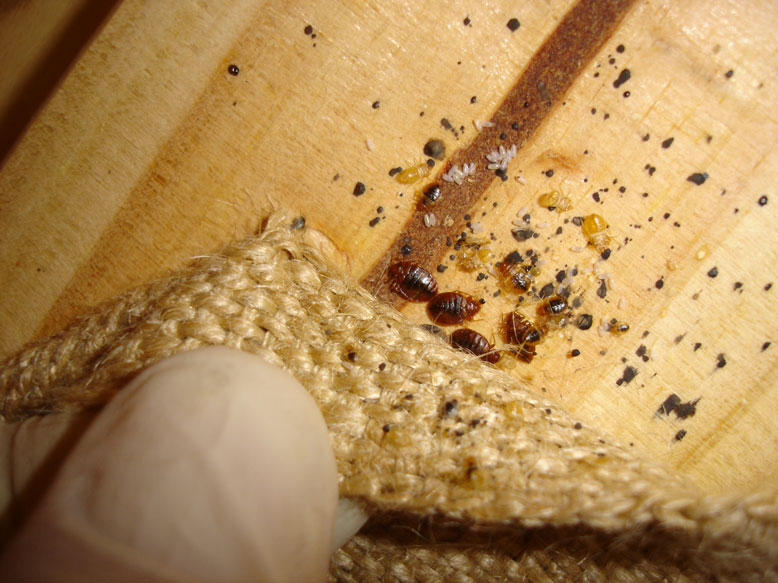
Photo from bedbugdefense.com

According to an article we read at BedBugDefense.com, before DDT was banned, it was used to kill bed bugs, as it was highly toxic to them and would remain in the application site for more than a year to prevent resurgences.  However, it was banned as it was determined that DDT caused cancer, and since 1995, bed bugs have made a rather surprising comeback and have infested homes all across North America.

According to the EPA, bed bugs are considered a public health pest, although they are not known to transmit or spread any disease.  However, because they do feed on blood, they can cause allergic reactions at the bite site, whether it is simply a small mark or a whole body reaction.  According to the CDC, bites can also cause secondary infections of the skin, and may even cause affect the mental health of those they infest.  People who have experience bed bug infestations may experience things like anxiety, insomnia, and systemic reactions.

However, what I think may be the scariest thing about them is that you can pick them up anywhere.  All it takes is one brush of the arm from someone on the subway, sleeping on your friend’s couch, or staying in a hotel to pick them up, and once you have bed bugs, they will get into everything: in curtains, couches, beds, and electronics.  This is what makes them so difficult to get rid of (also accounting for the fact that they actually live longer in the cold and love warm temperatures!).  And while you think that it can’t happen to you, think again.   No place is immune to the bed bug.  Your home doesn’t have to be “dirty” for you to have a bed bug infestation.  They can infest even the cleanest of places.

So I’m sure by now you’re probably freaking out and wondering how you can stop these intruders before they attack.  Well, there are certainly some precautions you can take to ensure you don’t have a bed bug infestation.

Photo from allbedbugs.com

The first thing you’ll want to do is to inspect your apartment for bed bugs before you move in.  You could either hire someone to do this or do it yourself.  In either case, you’ll want to do this before you move in because bed bugs can go undetected for months.  If you do choose to do this yourself, you’ll want to be sure to go through The Bed Bug Inspectors checklist.

  • Check for telltale signs.  You’ll want to check the floors and other surfaces for small black spots, shed bed bug skins, egg shells, live bed bugs (if you don’t know what they look like use the NYC Department of Health and Mental Hygiene checklist), and bloody or rusty stains.  Another sign is a sweet or offensive musty odor.
  • Uncover their potential hiding spots.  Take a flashlight and a magnifying glass and thoroughly inspect window and door frames, cracks and crevices, carpet tack strips, baseboards, behind outlet and switch plates, smoke detectors, thermostats, loose wall paper, molding, and wall junctions.

Once you made sure there are no signs of bed bugs, you’ll want to be sure to “bed bug proof” your home.  While you can’t prevent everything, there are some precautions you can take.  The first thing you’ll want to do is be sure to elevate your mattress off the ground.  You will also want to protect your mattress by using a protective mattress encasement, as well as protective pillow encasements.  You may consider using climb up interceptors on the feet of your bed frame.  These will help prevent and trap bugs from climbing onto your mattress.  You may want to monitor your home by conducting regular inspections and by placing bed bug traps around your home.  While this won’t solve the problem, it will certainly give you a definitive answer if your home is infested or not.

In order to prevent future infestations, you will want to be sure you are careful of where you stay and who is staying with you.  When you go on vacation, you can check the hotel you’ll be staying in by going to BedBugRegistry.com to see if there have been any bed bug reports.  You will also want to be sure to conduct an inspection of your room before you place your belongings down, and you will want to keep your belongings elevated off the floor at all times.

To ensure that your friends don’t bring bed bugs to your home, help them to inspect theirs.  Make sure they are as careful as you are about inspecting their home, and staying clear of places that could potentially have bed bugs.  With what you learn, you can help protect themselves too.

Standard
JumpOffCampus

We need your help!

We’re currently working on some research in relation to on- and off-campus housing and we need your help!  We’re looking for either current students or those who have recently graduated (either in 2011 or even more recent).  If you fit this description, click on this link to take the survey https://docs.google.com/spreadsheet/viewform?pli=1&formkey=dGJqMjBHZjIyRGluNDlkbllsUFVQRlE6MQ#gid=0 It should only take about 10-15 minutes to complete, and it’s really simple, we promise.

Standard