Finances, Housing Advice, Renting

The Lowdown on Renters Insurance

There’s a lot to consider when you decide to move off-campus, including remembering all the furniture you have to bring, all the supplies you’ll need, and all the food you’ll have to buy.  However, before you move in, you may want to consider getting renters insurance.

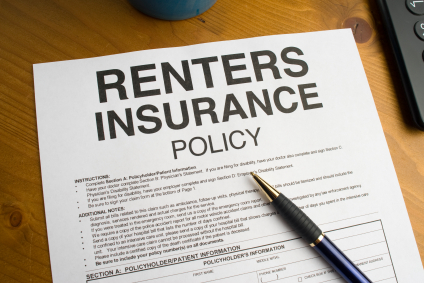
In an article we read by the National Association of Insurance Commissioners, what many students may not realize is that most landlords will not have insurance that protects their renters’ property.  More and more landlords are, in fact, requiring that their tenants have renters insurance when they move in.  For students, renters insurance is a great way to protect important things like computers, stereos and other important property.  While you may be concerned that it’s an added expense, consider that the premiums are only about $15 to $30 a month.  That will save you a lot if your laptop gets damaged or stolen!

Photo from myfirstplace.com

When you’re looking at purchasing renters insurance, there are two basic types of coverage you should be aware of.  The first type is personal property coverage (the most common type), which will pay to repair or replace your property if it’s damaged, destroyed or stolen.  The second type is liability coverage, which will protect you against any claim or lawsuit from any injury or damage while on the property that you’re renting.

However, there are many differences when it comes to the providers and the plans they offer.  Be sure to talk to your landlord, your parents, and the insurance providers about the plans they offer and what they cover.  Don’t take the first plan you see, but shop around before you make your decisions so that you get the coverage that works best for you.

Here’s a checklist we found at Leaky.com that will help make it easier for you to find renters insurance.

Standard
Housing Advice

Don’t let the bed bugs bite!

Bed bugs, up until a few years ago, seemed like a pest of the past, and the saying “Don’t let the bed bugs bite” just seemed like something your grandmother would tell you before you went to bed.  However, infestations have become more and more common and it seems like the bed bug has made its comeback in the developed world. I don’t know about you, but bed bugs give me the heebie jeebies, and while it isn’t a pleasant subject it is certainly something to consider when you’re renting.  This because bed bugs not only survive on the blood of mammals (i.e. us!), but they also can completely infest your home.

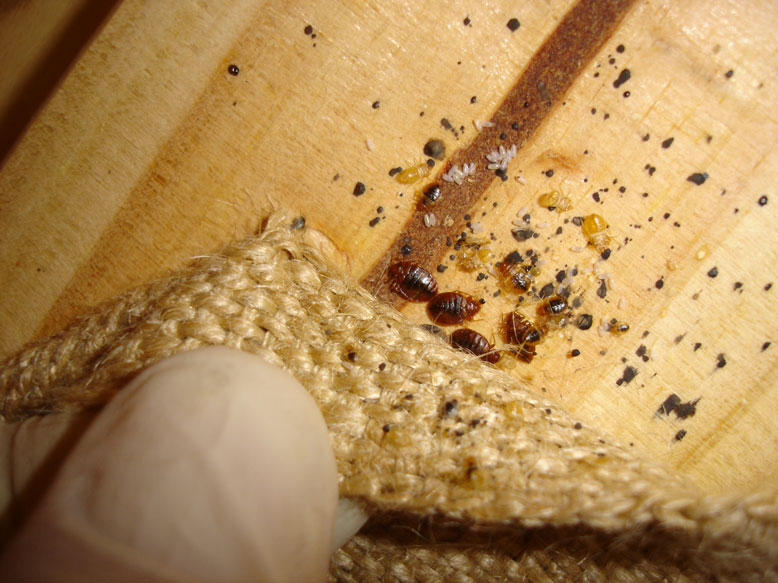
Photo from bedbugdefense.com

According to an article we read at BedBugDefense.com, before DDT was banned, it was used to kill bed bugs, as it was highly toxic to them and would remain in the application site for more than a year to prevent resurgences.  However, it was banned as it was determined that DDT caused cancer, and since 1995, bed bugs have made a rather surprising comeback and have infested homes all across North America.

According to the EPA, bed bugs are considered a public health pest, although they are not known to transmit or spread any disease.  However, because they do feed on blood, they can cause allergic reactions at the bite site, whether it is simply a small mark or a whole body reaction.  According to the CDC, bites can also cause secondary infections of the skin, and may even cause affect the mental health of those they infest.  People who have experience bed bug infestations may experience things like anxiety, insomnia, and systemic reactions.

However, what I think may be the scariest thing about them is that you can pick them up anywhere.  All it takes is one brush of the arm from someone on the subway, sleeping on your friend’s couch, or staying in a hotel to pick them up, and once you have bed bugs, they will get into everything: in curtains, couches, beds, and electronics.  This is what makes them so difficult to get rid of (also accounting for the fact that they actually live longer in the cold and love warm temperatures!).  And while you think that it can’t happen to you, think again.   No place is immune to the bed bug.  Your home doesn’t have to be “dirty” for you to have a bed bug infestation.  They can infest even the cleanest of places.

So I’m sure by now you’re probably freaking out and wondering how you can stop these intruders before they attack.  Well, there are certainly some precautions you can take to ensure you don’t have a bed bug infestation.

Photo from allbedbugs.com

The first thing you’ll want to do is to inspect your apartment for bed bugs before you move in.  You could either hire someone to do this or do it yourself.  In either case, you’ll want to do this before you move in because bed bugs can go undetected for months.  If you do choose to do this yourself, you’ll want to be sure to go through The Bed Bug Inspectors checklist.

  • Check for telltale signs.  You’ll want to check the floors and other surfaces for small black spots, shed bed bug skins, egg shells, live bed bugs (if you don’t know what they look like use the NYC Department of Health and Mental Hygiene checklist), and bloody or rusty stains.  Another sign is a sweet or offensive musty odor.
  • Uncover their potential hiding spots.  Take a flashlight and a magnifying glass and thoroughly inspect window and door frames, cracks and crevices, carpet tack strips, baseboards, behind outlet and switch plates, smoke detectors, thermostats, loose wall paper, molding, and wall junctions.

Once you made sure there are no signs of bed bugs, you’ll want to be sure to “bed bug proof” your home.  While you can’t prevent everything, there are some precautions you can take.  The first thing you’ll want to do is be sure to elevate your mattress off the ground.  You will also want to protect your mattress by using a protective mattress encasement, as well as protective pillow encasements.  You may consider using climb up interceptors on the feet of your bed frame.  These will help prevent and trap bugs from climbing onto your mattress.  You may want to monitor your home by conducting regular inspections and by placing bed bug traps around your home.  While this won’t solve the problem, it will certainly give you a definitive answer if your home is infested or not.

In order to prevent future infestations, you will want to be sure you are careful of where you stay and who is staying with you.  When you go on vacation, you can check the hotel you’ll be staying in by going to BedBugRegistry.com to see if there have been any bed bug reports.  You will also want to be sure to conduct an inspection of your room before you place your belongings down, and you will want to keep your belongings elevated off the floor at all times.

To ensure that your friends don’t bring bed bugs to your home, help them to inspect theirs.  Make sure they are as careful as you are about inspecting their home, and staying clear of places that could potentially have bed bugs.  With what you learn, you can help protect themselves too.

Standard
Budget-Friendly Ideas

Afraid to cut the cord? Some not-so-scary alternatives to cable

When you’re thinking of cutting your expenses, you may want to consider cutting cable.  However, I’m sure as you read that some of you got the shudders, and some may have even passed out.  You may ask yourself (once you’ve picked yourself up off the floor), “How will I watch my favorite shows” or “How will I stay entertained?”  Well, we found a wide range of alternatives for you so that you can still watch your favorite shows but you don’t have to cringe every time you get your monthly bill.

You could opt for a subscription option.  These services offer you as much content as you can watch for a flat monthly rate.  Most of you have probably heard of Netflix, which offers you thousands of titles and only costs $7.99 for online streaming.  As not all of their titles are available to stream online, you may choose to increase your membership so that you can receive DVDs by mail.  This option, while it costs more, is only about $16 per month.  Similarly, Hulu Plus offers a service for $7.99 per month for unlimited online streaming.

Blockbuster offers a similar service, however, it does not allow you stream online.  This service costs about $9.99 if you want to get 1 DVD at a time, however, you can get up to 3 DVDs at a time for $19.99 per month.

If you can’t live without your baseball, you may want to get a subscription to MLB.tv.  This service also offers a flat rate for every out-of-market game, which you can watch as it’s happening or on demand.  This service ranges from about $84.99 per year (about $7 a month), to the most expensive plan at $298 per year (about $25 a month).

If you’re not looking to commit yourself to a monthly or yearly subscription, you may want to try a pay-per-view or per-episode service.  Apple iTunes offers TV shows from a wide array of networks like ABC, CBS, NBC, MTV, HBO, ESPN, Comedy Central, Disney Channel, and Showtime.  Episodes here range from about $1.99 to $2.99 per episode and can be streamed directly from your PC.  Amazon Instant Video also offers comparable prices for both TV shows and movies, and these too can be streamed directly from your computer.

Vudu allows viewers to rent movies and watch them from a variety of different devices, including the Xbox 360, a Playstation 3, a Blu-Ray player, an HDTV, an iPad, or a PC.  The price of this service is $2 per 2-day rental, and they offer new releases before other online streaming services like Netflix.

A slightly more “old-fashioned” way of renting a movie is through Redbox, which allows you to pick your movies up from any Redbox kiosk.  Standard DVDs cost $1.20 per day, Blu-ray discs cost $1.50 per day, and you can even rent video games for $2 a day.  Blockbuster also allows you to rent or purchase certain TV show and movie DVDs right from their website.  These prices for the newest releases are generally around $4 to $5 to rent (depending on quality), and about $13 to $18 to buy (also depending on quality).

If you’re looking to watch shows and movies on your TV, there is a wide range of devices that you can choose from.  Many gaming consoles today, in fact, have this capability, including the Xbox 360 and Playstation 3.  If you don’t own one of these consoles, you may want to consider devices like the Boxee Box ($149.99), the Sezmi (about $99), a Roku (from $49.99), or the Apple TV ($99).  Any of these devices will offer you a way to stream movies and TV shows from online to your TV.

Lastly, there are the free options (the best price EVER).  Hulu offers a large variety of TV shows and movies free to its users without any need for a subscription.  You can also find a lot of your favorite TV shows from those big broadcast networks like CBS, NBC, ABC, Comedy Central, and MTV right on their websites.  Other free services include Fancast, TV.com, Veoh, Joost, In2TV, and ESPN.go.com.

Whichever type of service or device you choose, you will certainly save when it comes to watching TV or movies.  In an article we read by Barbara Thau on DailyFinance, she explains that if you chose to pay for a $7.99 per month Netflix subscription, bought 3 seasons of your favorite TV show (say 13 episodes per season at 99¢) in iTunes from your Apple TV box ($99), watched TV shows for free on Hulu, and bought an MLB.tv subscription for the year for $84.99, you would spend $391.77 per year.  If you compare this to Verizon’s basic cable plan, which is $64.99 per month ($779.98 per year, not including the equipment), Cox’s basic bundle at $80.94 per month ($971.28 per year, without the equipment), or Comcast’s basic package, which costs on average about $59 per month ($708 per year), you would save, on average, about $400 per year.  So no matter what choice you make, you won’t have to feel so lost without cable because there are alternatives out there that will still help you to save and keep you entertained.

Some articles we referenced:

http://www.pcworld.com/article/187189-2/cable_cutters_cheap_alternatives_to_tv_dsl_and_cell_service.html

http://www.techflash.com/seattle/2010/03/best_alternatives_to_cable_tv.html

Standard
Housing Advice

Apartment Move In Checklist

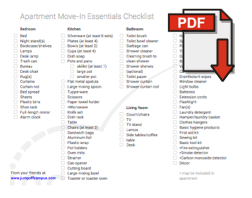
Apartment-Move-In-Essentials-Checklist-Screengrab

Whether this is the first time you’re moving off campus, or you’ve been living off campus, it always seems like you’re forgetting something when it comes to packing everything you’ll need.  Trust us:  We’ve been there.  That’s why we’ve come up with a checklist of things you’ll need when you start packing up.  We know, it looks like one heck of a list, but you just never know what you’ll forget.

Click here to download a PDF copy.

BEDROOM

  • Bed
  • Night stand(s)
  • Bookcase/shelves
  • Lamps
  • Desk lamp
  • Trash can
  • Bureau
  • Desk chair
  • Rug(s)
  • Curtains
  • Curtain rod
  • Bed spread
  • Sheets
  • Plastic bins
  • Shoe rack
  • Full-length mirror
  • Alarm clock

KITCHEN

  • Silverware (at least 8 sets)
  • Plates (at least 4)
  • Bowls (at least 2)
  • Cups (at least 4)
  • Wine glasses (for those 21+)
  • Dish soap
  • Pots and pans (at least 1 skillet, 1 large pot, and 1 smaller pot)
  • Flat metal spatula
  • Large mixing spoon
  • Tupperware
  • Scissors
  • Paper towel holder
  • Microwave (if the apartment doesn’t come with one already)
  • Knife set
  • Dish rack (for next to the sink when you’ve finished washing them)
  • Table
  • Chairs (at least 2)
  • Sandwich bags (you may want gallon size and smaller sizes)
  • Aluminum foil
  • Plastic wrap
  • Pot holders
  • Oven mits
  • Strainer
  • Can opener
  • Cutting board
  • Large mixing bowl
  • Toaster or toaster oven

BATHROOM

  • Toilet brush
  • Toilet bowl cleaner
  • Plunger
  • Garbage can
  • Shower cleaner
  • Cleaning brush to clean shower
  • Shower shelves (optional)
  • Toilet paper
  • Shower curtain
  • Shower curtain rod

LIVING ROOM

  • Couch/chairs (depending on how much space you have)
  • TV (optional)
  • TV stand (also optional)
  • Lamps
  • Side tables/coffee table
  • Desk (you may want to include one in case you want to work in the living room)

MISCELLANEOUS

  • Hand soap (for both bathroom and kitchen)
  • Sponges
  • Paper towels
  • Tissues
  • Garbage bags
  • Broom and dust pan
  • Vacuum
  • Carpet cleaner (for those nasty spills)
  • Disinfectant wipes
  • Window cleaner
  • Light bulbs
  • Batteries
  • Extension cords
  • Flashlight
  • Fan(s)
  • Laundry detergent
  • Hamper/laundry basket
  • Clothes hangers
  • Basic hygiene products
  • First aid kit
  • Sewing kit
  • Basic tool kit
  • Fire extinguisher (if your apartment doesn’t already have one)
  • Smoke detector (your landlord should provide one, but you should make sure it works properly when you first move in)
  • Carbon monoxide detector (your landlord should also provide one of these, but you should make sure it works properly when you first move in)
  • Décor (i.e. picture frames, posters, decorative pillows, etc.)
Standard